
Emergency Air Duct Cleaning Near Me: What Elgin Homeowners Should Do First
If water got into your duct system, cleaning it before drying it out is the same as painting over mold. It hides the problem and makes the real fix more expensive. Most of what Elgin homeowners call a duct emergency isn’t one that a cleaning crew should touch first. Sudden odors, debris at the registers, or moisture after a leak all have a correct first step, and it usually happens before anyone picks up a vacuum. Get the order right and you save money, protect evidence your insurer will want, and avoid spreading contamination through the house.
If you’d rather hand it to a pro, call (855) 393-2846. We answer 24/7, with fast dispatch from 7am to 7pm, Sunday through Friday.
Why “Emergency” Duct Cleaning Usually Isn’t the First Move
A duct system is a network, not a set of pipes you scrub one by one. Whatever is airborne in the house, or growing on a wet interior surface, gets pushed through that network every time the blower runs. So the first question isn’t “who cleans this” but “what’s the source, and is it still active?” Cleaning a system while water is still present, or while a contaminant is still being introduced, wastes the cleaning and leaves you right back where you started. In Elgin, where older homes often have original ductwork with more seams and joints than a newer build, that network has more places for moisture and debris to settle.
Here’s the part most people skip: document first. Before any service work begins, take photos of what you can see at the registers and around the air handler. Note the date, the room, and what you observed. That evidence matters for an insurance claim and it keeps any contractor accountable for what they found versus what they claim. A legitimate outfit expects you to do this. A rushed one would rather you didn’t.
The Three Most Common Duct Emergencies in Elgin (and What to Do First in Each)
1. Post-flood or water intrusion
This is the case that ruins budgets when handled out of order. Water in or around the ducts means the priority is drying and stopping the source, not cleaning. Cleaning a wet system spreads moisture and can feed microbial growth. Call your insurer, get the water source controlled, and get the structure dried. Only then does duct cleaning make sense. If you suspect visible mold growth on duct surfaces, that’s an indoor air quality assessment question, not a cleaning question, and you want a professional to look before equipment goes in.
2. Sudden burning or chemical odor
Shut the HVAC system off. That’s the correct first step, and it comes before you call anyone. A burning smell can point to an overheated motor, a wiring issue, or something drawn into the return. A chemical smell can mean a spill, a refrigerant problem, or an off-gassing source. Running the system spreads whatever it is through the whole duct network. Turn it off, ventilate the house, and if the odor is strong or accompanied by smoke or a burning-plastic smell, leave and call your utility or fire department. Duct cleaning comes after the source is identified and controlled, not before.
3. Visible debris or mold at the registers
Spotting fuzz, dark staining, or debris at a supply register is a signal to document, not panic. Photograph it. Check whether it’s surface dust, which is common, or growth that suggests moisture, which is the serious case. A cleaning on a dry, dusty system is straightforward. Growth tied to moisture needs the moisture fixed first. In our experience around Elgin, this distinction is where homeowners get talked into a cleaning they didn’t need, or skip one they did.
HVAC Shutdown: The Step Most People Get Backwards
Think about what a running system does. It pulls air from the returns, pushes it through the blower, and distributes it. If there’s a contaminant in the house, whether it’s smoke residue, a chemical spill, or disturbed debris, a running system is a delivery mechanism. Shutting it off at the thermostat is the single most useful thing a homeowner can do in an odor emergency before any contractor shows up.
- Turn the system off at the thermostat, not just at a vent.
- Don’t run the fan in “on” mode to “clear the air.” That keeps circulating whatever is in the house.
- Open windows if the outdoor air quality allows and the odor isn’t from outside.
- Note the time you shut it off. That timestamp helps anyone assessing the situation later.
We’re not saying you should never clean a system after an odor event. We’re saying cleaning before the source is controlled can leave the smell in place and cost you a second cleaning. If an odor emergency has you unsure of the next step, call (855) 393-2846 and we’ll talk through what we’d do.
Before You Book: Document the Conditions at Home
Photos taken before anyone arrives do work that a phone call can’t. They help your insurer process a claim, they give a contractor an accurate picture of the job, and they give you a comparison point after the work is done. A before-and-after record of a duct system is the difference between trusting the work happened and hoping it did.
- Photograph each supply and return register you can see, especially any with visible debris or staining.
- Photograph the air handler area and any accessible duct connections.
- If you see moisture, capture it and note whether it’s active or dried.
- Keep the photos organized by room and date so a claim or a contractor can follow the sequence.
This step matters more in an older Elgin home than a newer one, because retrofitted systems and original ductwork both tend to have more of the small gaps and seams where debris gathers. Those are the spots worth documenting before a cleaning, and worth checking afterward.
IAQ Assessment Versus Cleaning: Which Comes First?
Not every situation is a cleaning job. When the concern is indoor air quality, meaning visible mold growth, a persistent odor with no obvious source, or a health complaint tied to the home, the right first step is an assessment, not a cleaning. Cleaning a system without understanding what’s in it is guesswork. A cleaning is the right immediate response when the system is dry, the source of debris is known and controlled, and the goal is to remove accumulated buildup. The order matters: control the source, dry the space, then clean. Skip the first two and the cleaning is a stopgap.
What Legitimate Duct Cleaning Looks Like (and What “Emergency” Should Actually Mean)
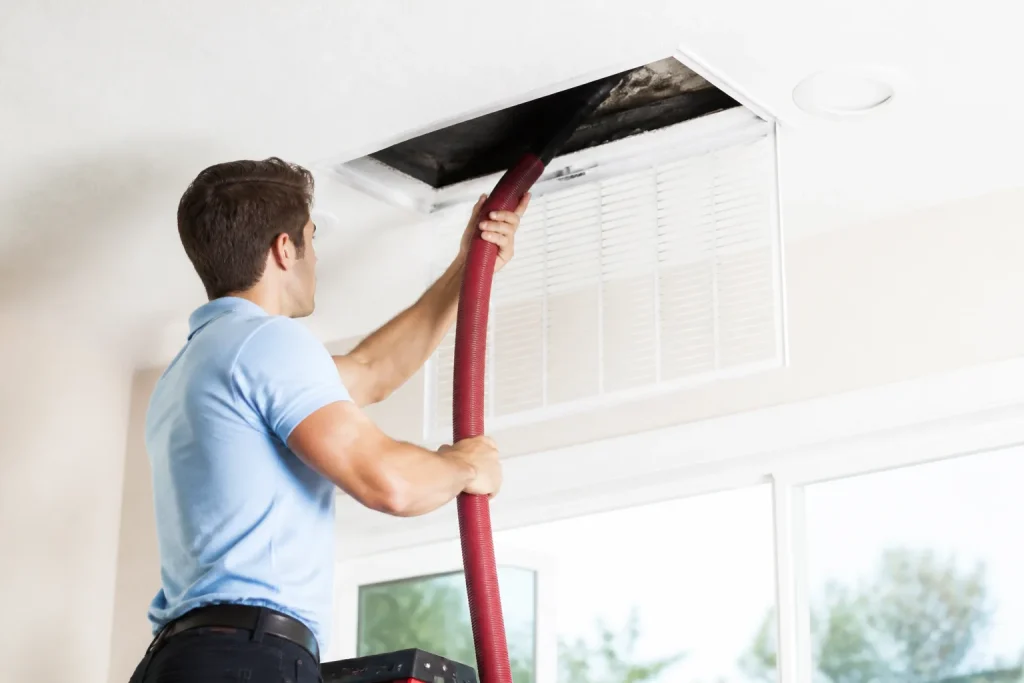
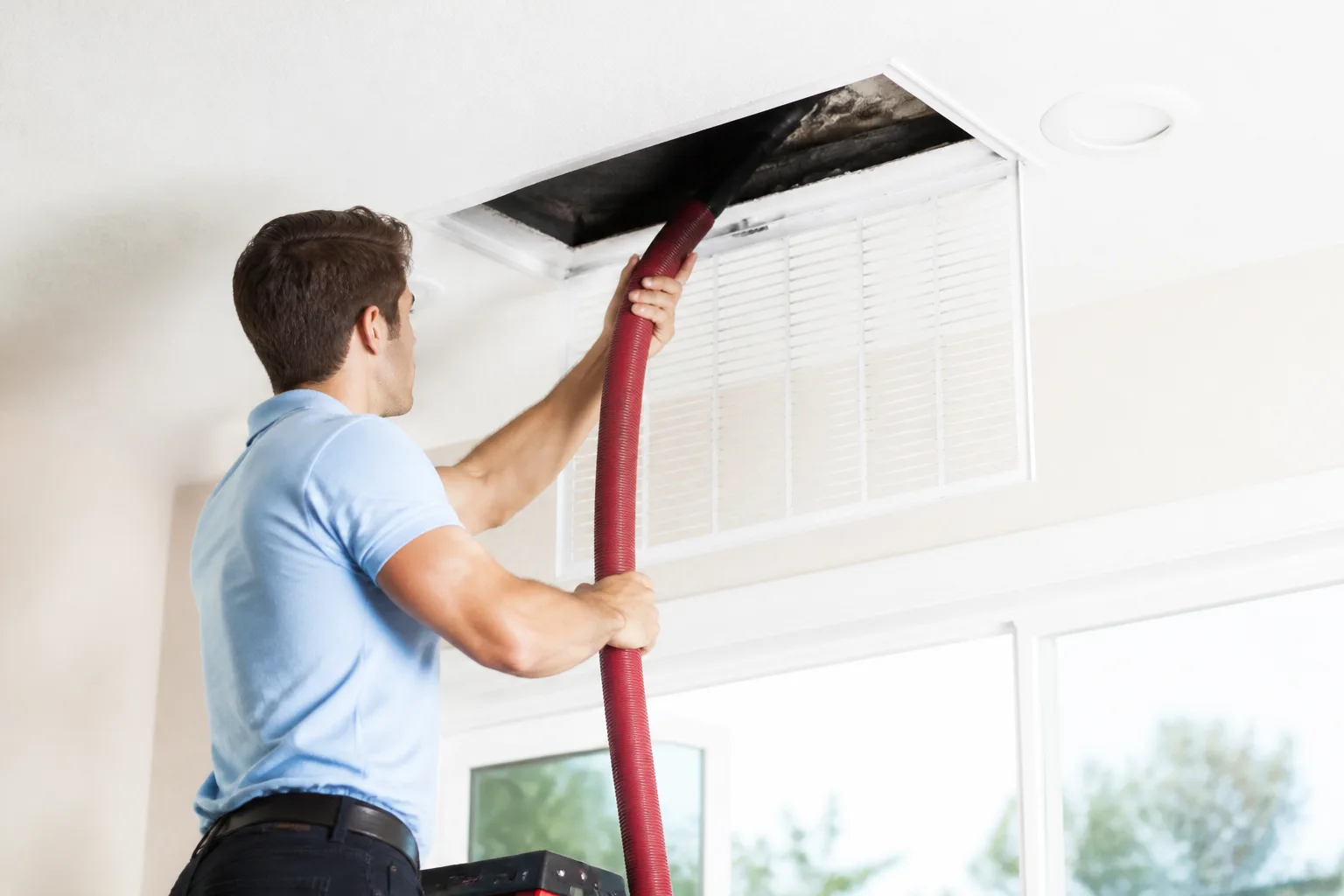
A real duct cleaning isn’t a rushed vacuum job with an “emergency” label on it. Contact cleaning means the equipment physically agitates buildup off the duct walls, which is what a rotary brush does. A professional setup captures that dislodged debris rather than redistributing it, which is where a HEPA-rated extraction standard comes in. On a proper job, that’s the level of capture you should expect, not a shop vac pointed at a single access point. When we work at a “duct cleaning Elgin” job, we use Rotobrush rotary-brush systems, Nikro HEPA-rated extraction, and Abatement Technologies equipment for containment, and we know our way around Honeywell and Aprilaire air quality components. A rushed job that calls itself emergency service is the opposite of that. Legitimate emergency service means a documented process: containment, capture, and post-job verification that the work was done. Any company that can’t describe its equipment and its process doesn’t have one worth booking.
One thing that separates a real operation from a bargain one: a cleaned but leaking duct system still wastes energy and pulls in contaminants. That’s why duct repair is part of the picture, not an upsell. If you’re comparing options, our air duct cleaning service explains the whole-system approach.
When to Call a Pro
Call us when the source is controlled, the system is dry, and you have documented what you found. Call sooner if you’re unsure whether the source is controlled, since a short conversation can save you a wasted cleaning. We’ll tell you honestly if an assessment is a better first move than a cleaning.
Related services in Elgin: dryer vent cleaning for vent fire risk, and Elgin for what a whole-system job covers.
The Bottom Line
Most duct emergencies get one correct first step: shut off the HVAC, control the source, and document what you see before cleaning. In a water event, dry first. In an odor event, find the source first. In a mold concern, assess first. Cleaning is the step that follows, not the step that leads. If you’re in Elgin and need help, Duct Cleaning Elgin offers free estimates. Call (855) 393-2846 and we’ll walk you through the next step.
Frequently Asked Questions
Turn the system off at the thermostat and open windows. Running the fan spreads whatever is in the house through the duct network. If the smell is strong, or there’s any smoke, leave and call your utility or fire department. Duct cleaning happens after the source is identified.
No. Dry the space and stop the water source first, then clean. Cleaning a wet system can spread moisture and feed growth. Get your insurer involved and get the structure dry before any duct work begins.
If you see visible mold growth, have a persistent odor with no clear source, or a health issue tied to the home, start with an assessment. If the system is dry and the debris source is known and controlled, a cleaning is the right move. When in doubt, ask before booking.
Cleaning a system before the source is controlled is the equivalent of painting over mold. The problem returns, and you’ve paid twice. Doing the steps in order protects your budget and your insurance claim.
We clean ducts once it’s safe and the source is controlled. Call (855) 393-2846. We answer 24/7, with fast dispatch from 7am to 7pm, Sunday through Friday. Estimates are free.
Written by the team at Duct Cleaning Elgin.
Need Air Duct Cleaning Help?
Call Duct Cleaning Elgin - licensed & insured, with free written estimates in Elgin.
(855) 393-2846