
Last updated November 16, 2026
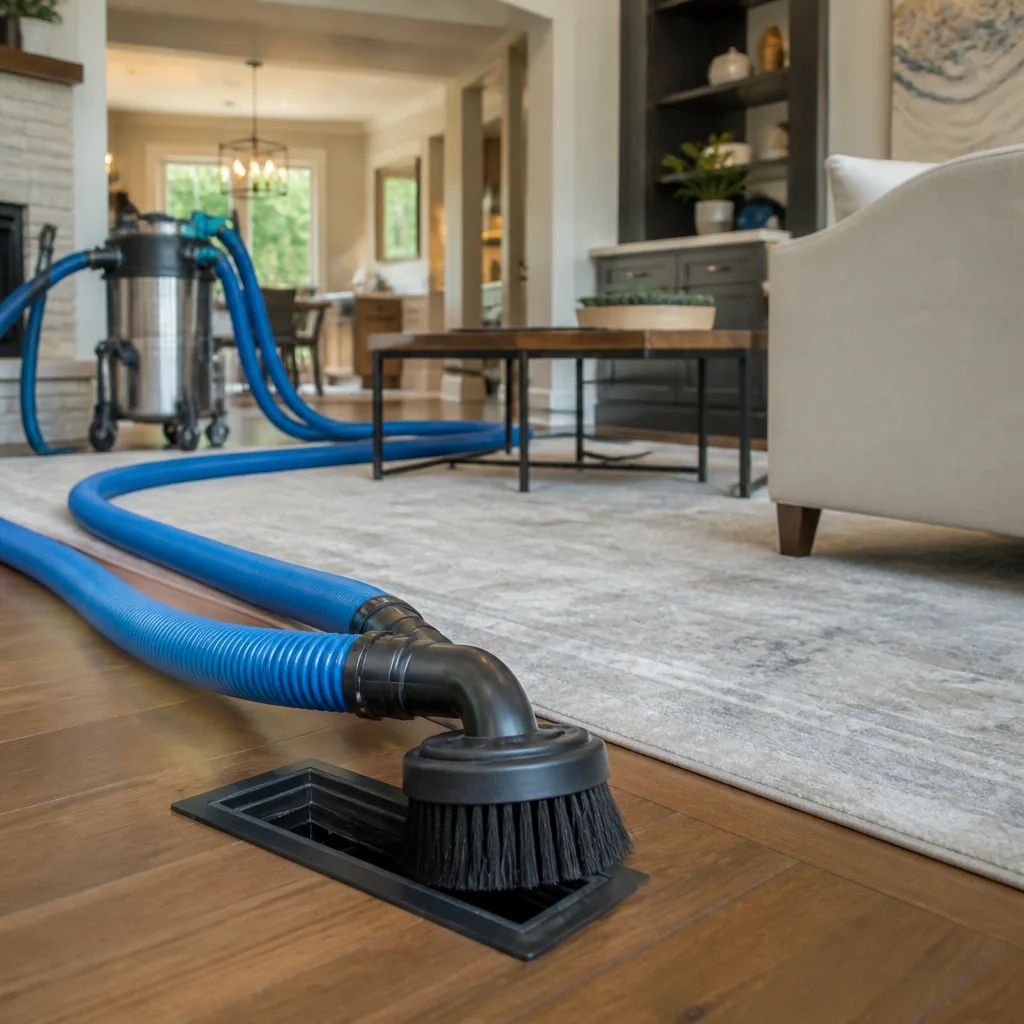 Whole-home duct cleaning
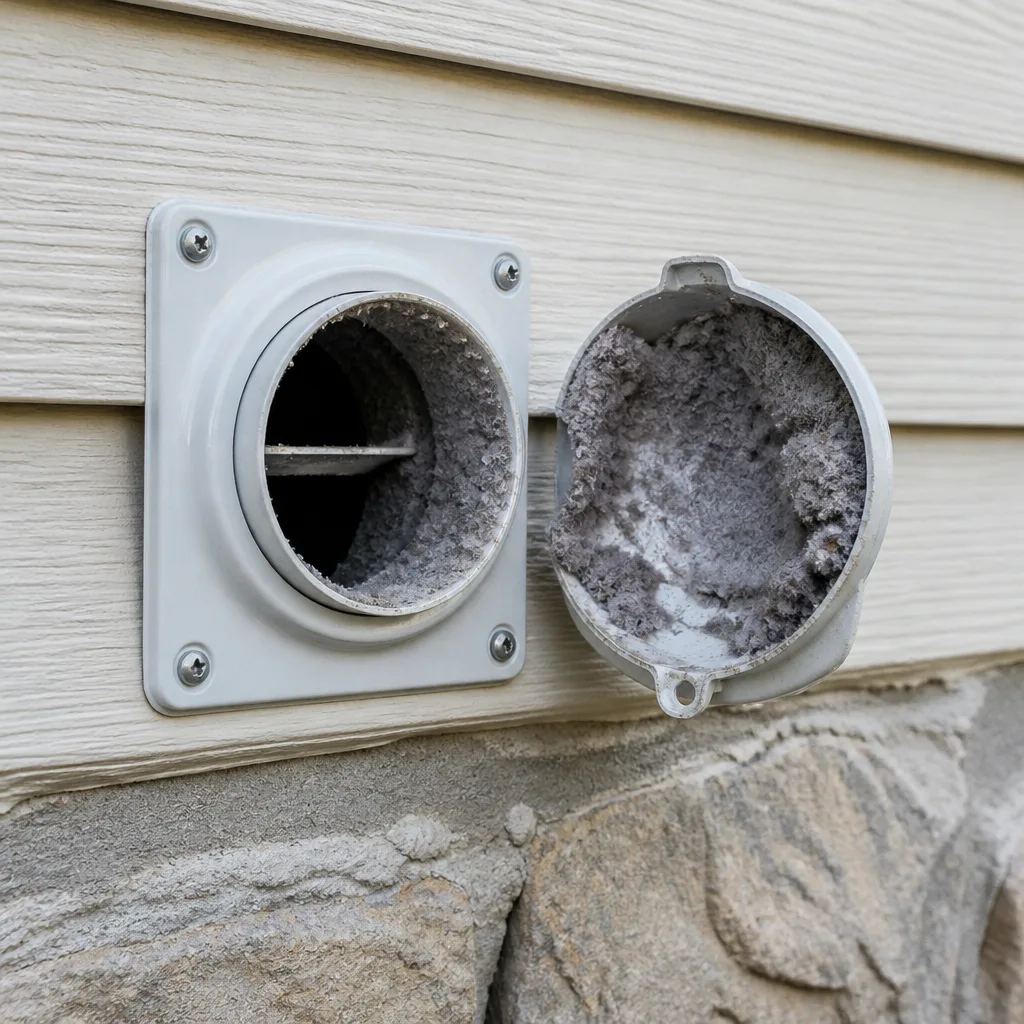 Dryer vent cleaning
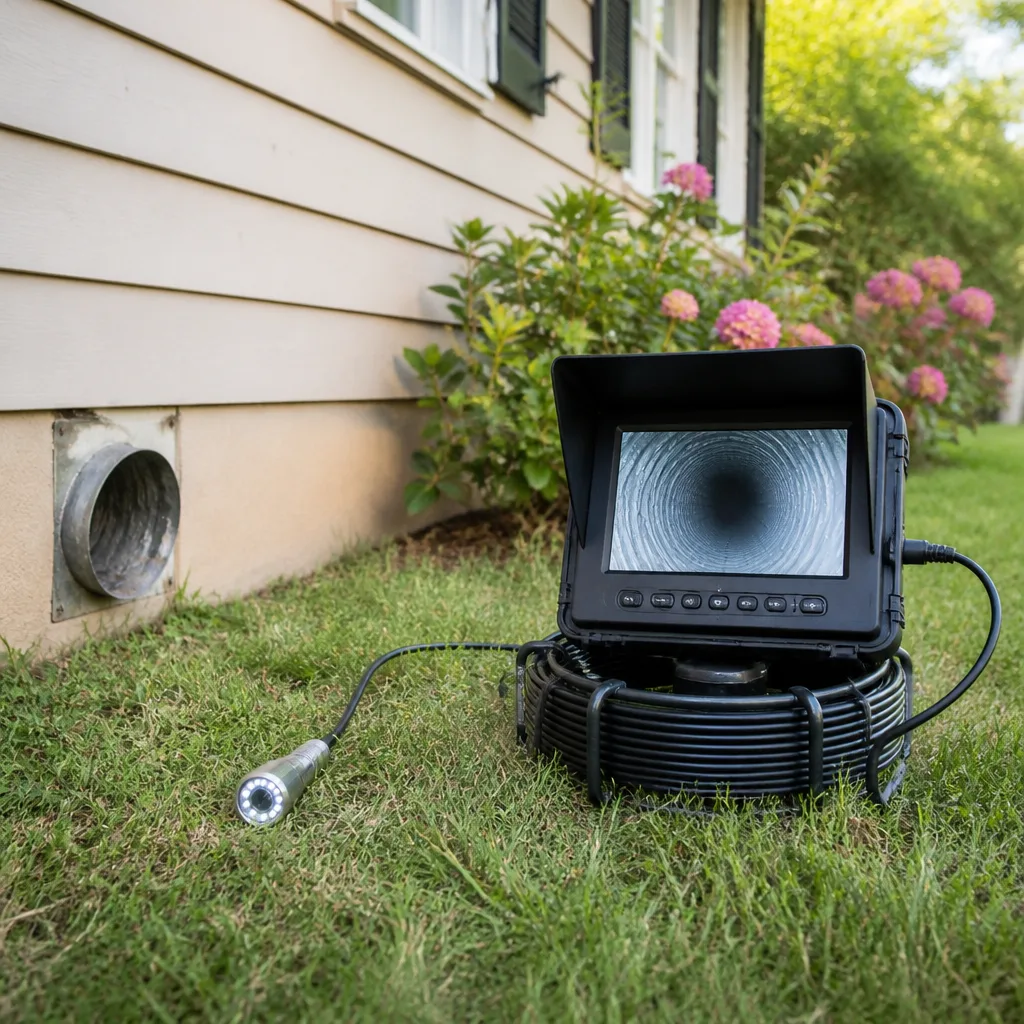 Camera inspection
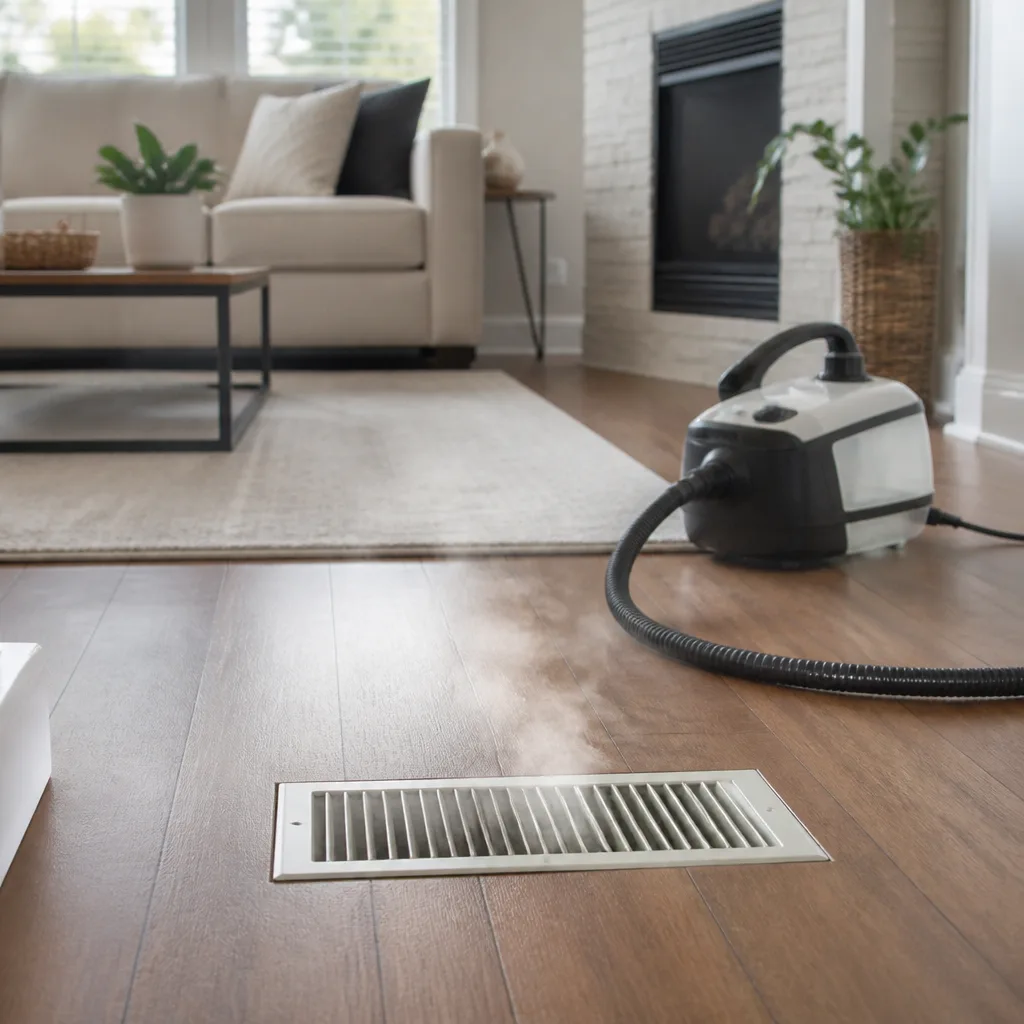 Sanitizing & deodorizing
Whole-system duct and dryer vent check with before-and-after photos - you see exactly what came out of your vents
That "$99 whole-house special" is a bait ad - the real number appears once they are in your hallway, or the "clean" is a shop-vac at the register. We photograph the inside of your ducts before and after instead.
The Complete Guide to Air Duct Cleaning in Elgin
A shop vac and an air whip can move debris from one section of ductwork to another. That’s the part most homeowners don’t hear. A duct run that gets blown around without proper containment can end up with more loose particulate sitting in it than before anyone arrived, even though the technician “cleaned” it. We’ve seen it enough times to know the difference between a duct that looks clean at the register and a duct system that actually is. This guide walks through what a real full-system clean involves, what Elgin’s clay-heavy soil and older housing stock put into the ducts in the first place, how to read the before-and-after evidence you’re handed, and why the EPA guidance on duct cleaning gets misquoted by nearly everyone. By the end you’ll know how to judge a quote on process instead of price alone.
Quick Answer
A proper air duct cleaning in Elgin removes accumulated debris from the entire duct system using contact cleaning (rotary brush agitation), HEPA-rated negative-air extraction, and full containment – not a single-pass vacuum from one access point. The work should be documented with before-and-after photos of your own ducts, and the price should be one flat figure per system agreed in writing before anything starts. If a quote is built on a low teaser price plus per-vent charges, it’s a sign the process is thin.
Styles & brands we work with
- Whole-home duct cleaning
- Dryer vent cleaning
- Camera inspection
- Sanitizing & deodorizing
Table of Contents
- Why Your Duct System Is the Real Unit of Cleaning
- What Elgin’s Soil and Housing Stock Put in Your Ducts
- The Three Equipment Categories a Real Clean Requires
- Source Removal vs. Surface Agitation
- How to Read Before-and-After Documentation
- What the EPA Guidance Actually Says – and What It Doesn’t
- What a Full-System Clean Looks Like, Step by Step
- How Often Ducts Actually Need Cleaning in Elgin
Why Your Duct System Is the Real Unit of Cleaning
A duct system is not a collection of separate tubes. It’s one connected pressure network, and the return side pulls air from every room while the supply side pushes conditioned air back out. When debris sits in one branch, the pressure differential across the whole system keeps redistributing it. Clean two bedrooms and leave the main trunk untouched and the system will move that trunk debris into the clean branches within a heating season. That’s why whole-system thinking matters more than spot cleaning, and why “we cleaned all your vents” tells you almost nothing about what happened inside the ductwork.
Homeowners in Elgin often ask us to “clean the ducts” when what they actually have is a duct system problem: one section caked with debris, another loose, a return chase pulling from a basement that shares air with a dusty crawlspace. Those are three different jobs on the same system. Contact cleaning with a rotary brush reaches the duct walls. HEPA-rated extraction captures what the brush loosens. Negative air pressure keeps the loosened material from drifting into the living space. Miss any one of those and you’ve moved dirt around instead of removing it.
Leaks belong in the same conversation. A duct system that’s been cleaned but still leaks at the joints pulls unconditioned air from attics, garages and wall cavities, and that air goes straight into the rooms you just paid to have cleaned. Structural repair is a separate step from cleaning, and it’s the one most cleaning operators skip. If you want to see how we handle that split, our Duct Cleaning Elgin page covers the split between cleaning and repair work.
What Elgin’s Soil and Housing Stock Put in Your Ducts
Elgin sits on clay-heavy soil, and that matters inside the house as much as in the yard. Clay doesn’t drain well, so during wet seasons water sits close to foundations and finds its way into basements and crawlspaces. When a return duct pulls air from either space, it also pulls fine mineral dust and any damp-earth particulate that’s settled there. Humid summer air then does what humid air does: it makes that material clump on duct walls instead of passing through the filter. What you get over a few seasons is caked-on buildup, not a loose layer you can vacuum off in one pass.
The housing stock compounds it. A large share of Elgin’s homes went up before 1980, which means:
- Original sheet metal ductwork with seams that have had decades to separate, giving dust a place to settle and air a path out of the system.
- Retrofit duct routing where a later furnace, AC or addition left the return path stepped down or jogged, creating low-velocity pockets where debris drops out of the airstream.
- Basement and crawlspace returns that pull air from the dampest part of the house, which in a clay-soil town is a real seasonal problem.
- Older flex duct that has sagged, which restricts airflow and lets debris build in the low points.
None of this means every pre-1980 Elgin home needs immediate cleaning. It means the inspection should look at the system’s actual condition, not just its age. Neighborhoods on the west side, the older streets near downtown, and the postwar subdivisions all present differently. If you’d like to know how we scope work across the city, our page on Elgin covers the local ground.
The Three Equipment Categories a Real Clean Requires
Professional duct cleaning isn’t one machine – it’s three categories of equipment working together. Each handles a different part of the job, and a service that only runs one of them is doing a partial clean.
- Contact cleaning equipment (rotary brush). A rotary brush physically scrubs the duct wall through the length of each run. We use the Rotobrush system, which is the professional standard for contact cleaning because it agitates and lifts bonded material rather than passing air over it. Vacuum alone cannot remove caked-on buildup – it can only carry away what’s already loose.
- HEPA-rated negative-air extraction. The moment a brush loosens debris, that material is airborne inside the duct. A HEPA-rated vacuum holds the system under negative pressure so the debris travels to the collection unit instead of settling back or escaping into the room. We run Nikro HEPA extraction, the same industrial standard you’d see in remediation work, because cleaning a duct system without proper negative air is a debris-redistribution exercise.
- Containment equipment. Access points have to be sealed while work is happening, and the collection unit has to be sized to the system. We carry Abatement Technologies equipment on every job, which is a remediation-grade brand rarely seen in residential duct cleaning and signals a containment-first approach rather than a vacuum-and-go one.
All three categories working together is what separates a duct system clean from a duct surface wipe. Mix one out and you’ve lost the reason the work is worth doing.
Source Removal vs. Surface Agitation
Two terms get used interchangeably in this trade and shouldn’t be. Surface agitation means a technician runs a whip or air nozzle through a duct, loosening whatever’s on the surface and moving it along. Source removal means the debris is physically lifted from the duct wall, captured by HEPA extraction and taken out of the building. Only one of those actually cleans the system.
Surface agitation has a place – it’s useful for knocking down light dust before a proper clean, and some operators use it as the whole job, which is where the trouble starts. Consider what happens to the duct that only gets agitated. Debris loosens from the far end of a branch and drifts to a low point or a stepped junction. If extraction isn’t holding negative air at the same time, that material settles in the next section down. The homeowner looks at the register, sees it clean, and assumes the job was done. Six months later there’s buildup again and the assumption is “ducts always get dirty fast.” Usually it’s that the duct was moved, not removed.
Source removal requires all three equipment categories from the previous section. It’s slower, and it’s the reason a proper system clean takes hours rather than minutes. When you’re comparing quotes, the question worth asking is direct: “Are you doing source removal with negative air the whole time, or surface agitation?” A service that answers with process details is doing the first. A service that answers with a price is not.
How to Read Before-and-After Documentation
You should not have to take a technician’s word for the work. Verifiable documentation comes in three main forms, and the right combination of them is what separates a professional job from one you’re asked to trust on reputation alone:
- Before-and-after photos of your own ducts. Not stock images, not a photo of a clean duct from another job – access points photographed at the start and end with recognizable landmarks so you can confirm they’re the same run. This is the minimum documentation standard.
- Airflow readings at the registers. A pressure or velocity reading taken before and after shows whether the system can actually move air. It also flags restrictions that cleaning alone won’t fix.
- Particle counts or visual inspection of the collection unit. The collection unit should visibly contain what was removed. If the unit comes back nearly empty, ask why.
The most useful single thing you can insist on is before-and-after photos of your ducts. If the operator doesn’t offer them, ask. If the answer is “it’s not company policy” or “the camera’s not working,” that’s your signal. The reason we photograph every system is simple: it’s the only proof that reads the same to the homeowner and to us. It also protects the operator – nothing ends an argument about whether work was done like a photo of the duct they were worried about.
What the EPA Guidance Actually Says – and What It Doesn’t
The EPA’s guidance on duct cleaning is one of the most quoted and least read pieces of advice in this trade. Both homeowners and quite a few contractors paraphrase it in ways that flip its meaning, and the resulting confusion costs people real money.
Here’s the accurate version in general terms. The EPA does not recommend routine duct cleaning as a matter of course, and it cautions that a poorly done cleaning can worsen indoor air quality. It does recommend cleaning when there’s visible evidence the system needs it: substantial visible mold growth on hard surfaces inside the ductwork, vermin infestation, or ducts clogged with debris that’s being discharged into the living space. The EPA also recommends that if a service offers duct cleaning, you ask what’s actually being done, because “duct cleaning” means different things to different companies.
Where the misquoting happens:
- “The EPA says you must clean your ducts every year.” It doesn’t. The EPA specifically avoids routine-frequency advice and points instead to condition-based reasons to clean.
- “The EPA says duct cleaning is a scam.” It doesn’t say that either. It says poorly done cleaning can make things worse, and it lays out what should trigger a proper clean.
- “The EPA recommends whatever service I’m being sold.” No vendor gets to claim EPA endorsement of their method. Use the guidance as a filter, not a badge.
Read the EPA guidance as a standard for when cleaning is worth doing and what conditions justify it. Then apply it to your own system’s condition, which is the only thing that matters when deciding whether to book the work.
What a Full-System Clean Looks Like, Step by Step
A proper system clean follows the same broad sequence on every job. The order is deliberate, and any operator who skips a step is cutting the reason the work exists.
- System inspection and layout. Every access point is identified – supply registers, returns, plenum connections, the air handler – and the technician maps where each run begins and ends so no branch gets missed.
- Containment setup. Registers and access points are sealed, and the HEPA extraction unit is connected at the main trunk to hold the entire system under negative pressure before any brushing starts.
- Contact cleaning of each branch. The rotary brush runs the full length of every duct, lifting bonded material off the walls. This is the step that differentiates a real clean from agitation.
- Extraction of loosened debris. HEPA-rated vacuum pulls the dislodged material into the collection unit while the system is still under containment.
- Main trunk and plenum cleaning. The largest-volume sections take longer and hold more debris than most homeowners expect. This is where bargain services typically cut corners.
- Repair assessment. Any leaking seams, disconnected joints or damaged sections are flagged. Cleaning a system that leaks is a partial result – our air duct cleaning service treats repair as a separate scope so the fix decision is yours.
- Documentation and walkthrough. Before-and-after photos of your own ducts are reviewed with you at the end, with any repair recommendations called out clearly.
The whole sequence typically takes several hours for a standard Elgin home. That timeline is not padding. It’s the difference between moving debris and removing it.
How Often Ducts Actually Need Cleaning in Elgin
There is no universal schedule. Duct cleaning is condition-based, and what triggers it in Elgin is specific to the local housing and climate. Rather than a calendar, watch for the following signals:
- Visible debris discharging from registers when the system runs.
- Persistent dust accumulation on surfaces a day or two after dusting.
- Unexplained airflow drops from one or more registers.
- Recent renovation work that put drywall dust or sawdust into the return path.
- Water intrusion into a basement or crawlspace that shares a return with the living space – which in clay-soil Elgin is a common seasonal issue.
- Homes with pets, or with occupants who have respiratory conditions that make air quality worth a closer look.
If none of those apply and the system is performing normally, cleaning can wait. When two or three of them line up, booking an inspection makes sense. On homes with a humidifier or media filter on the system, the filter side matters just as much – we handle Honeywell and Aprilaire air quality equipment for that reason, since cleaning the ducts and leaving a saturated humidifier pad or a clogged filter in place gives you half the result.
Common Mistakes to Avoid
- Hiring on price alone. The cheapest quote is usually cheapest because it drops the extraction or the containment step, which means the work moves debris instead of removing it. The one flat price should reflect a full system clean, not a per-vent charge on top of a teaser number.
- Accepting “we cleaned all your vents” as proof. Vent cleaning is not duct cleaning. The trunk, plenum, returns and every branch need to be in scope.
- Skipping the before-and-after photos. In Elgin’s older housing stock, where ducts hide behind wall cavities and under floors, photos of your own system are the only verification that holds up.
- Cleaning without repairing known leaks. A duct system that leaks pulls air from unconditioned space straight back into the clean side. Cleaning and repair belong in the same conversation.
- Forgetting the dryer vent because “the ducts were just done.” The dryer vent is a separate system entirely, and it’s the appliance fire risk the U.S. Fire Administration identifies as the leading cause of dryer-related fires. Our dryer vent cleaning service treats it as its own job for good reason.
- Believing “the EPA says every year.” It doesn’t. The EPA recommends cleaning on condition, not on a fixed schedule, which is why an inspection-first approach beats a subscription.
- Ignoring the filter and humidifier side of the system. Cleaning ducts while running a saturated pad or clogged filter fills the clean ducts with the same debris again. Guardsman media cabinets, Aprilaire humidifiers and Honeywell filters are part of the same air handling system and deserve the same attention.
See the difference
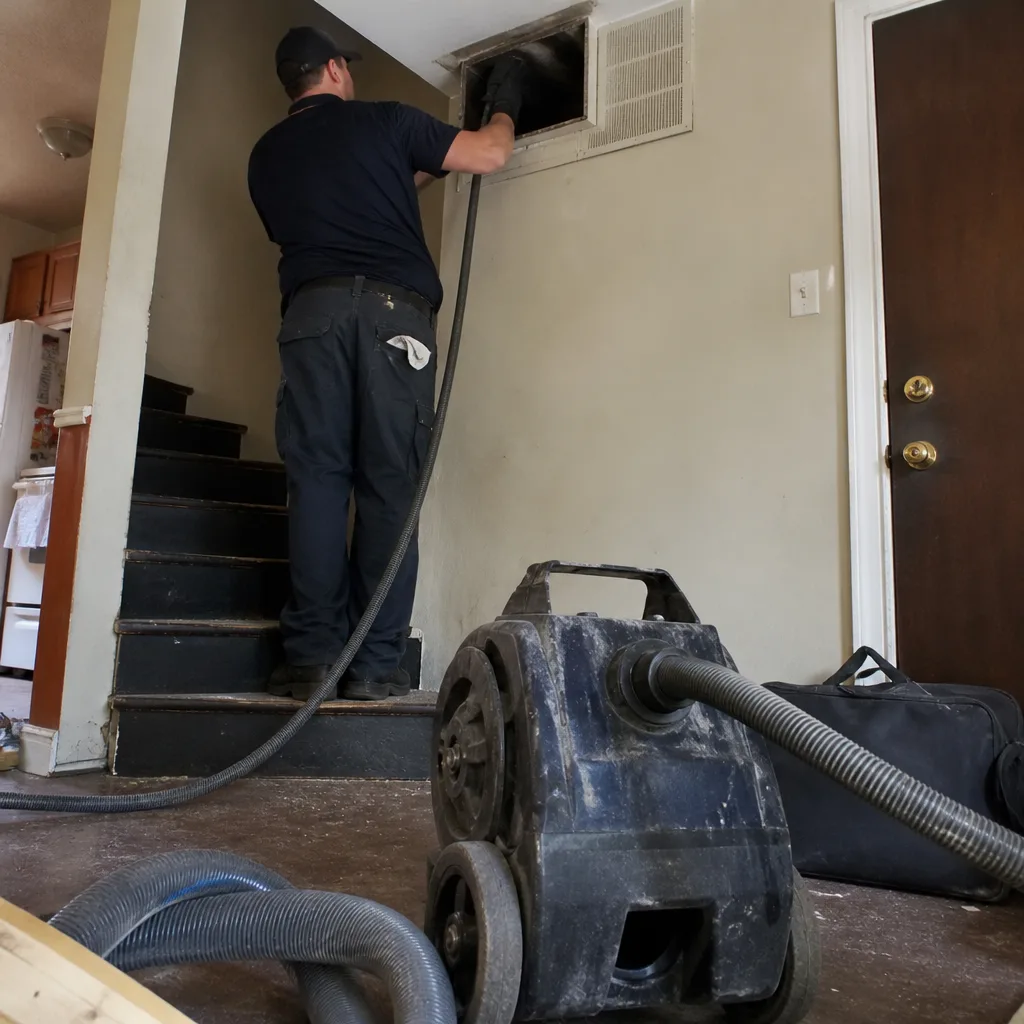 Before
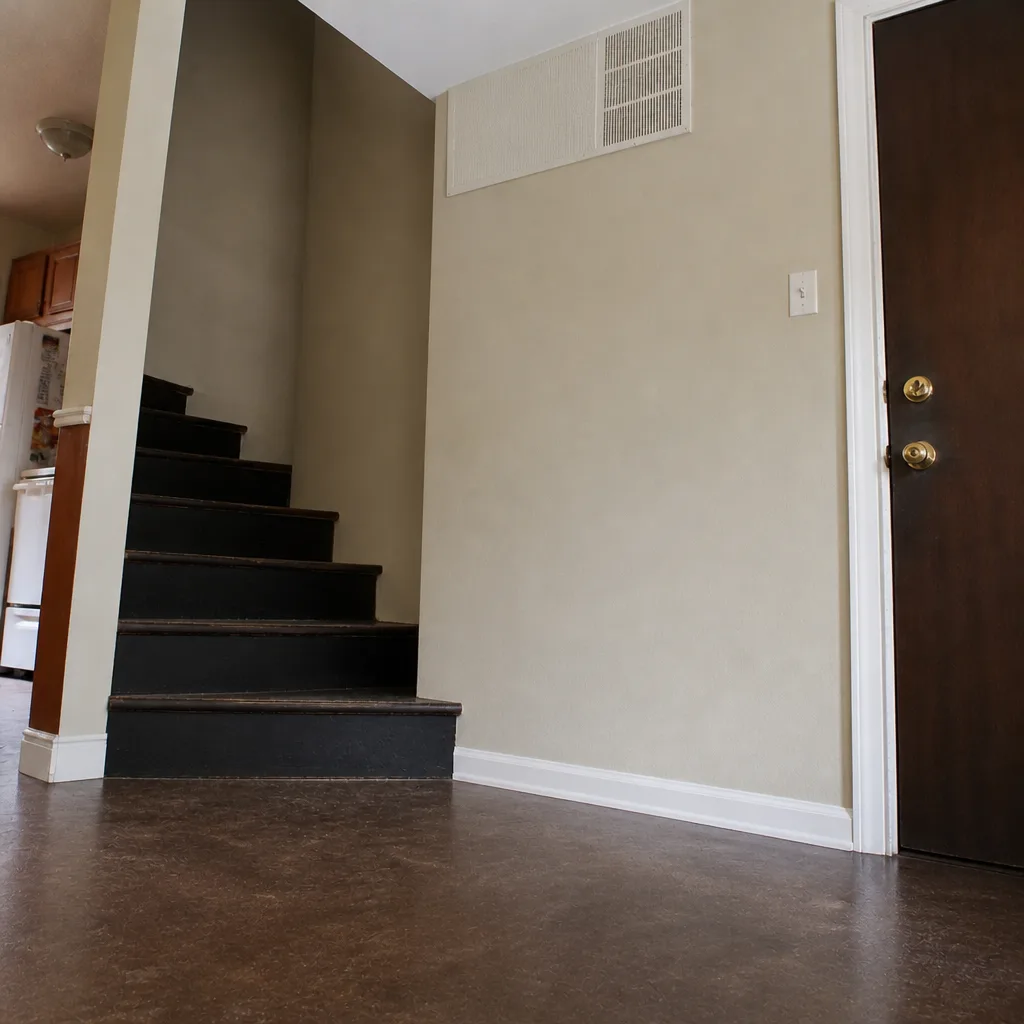 After
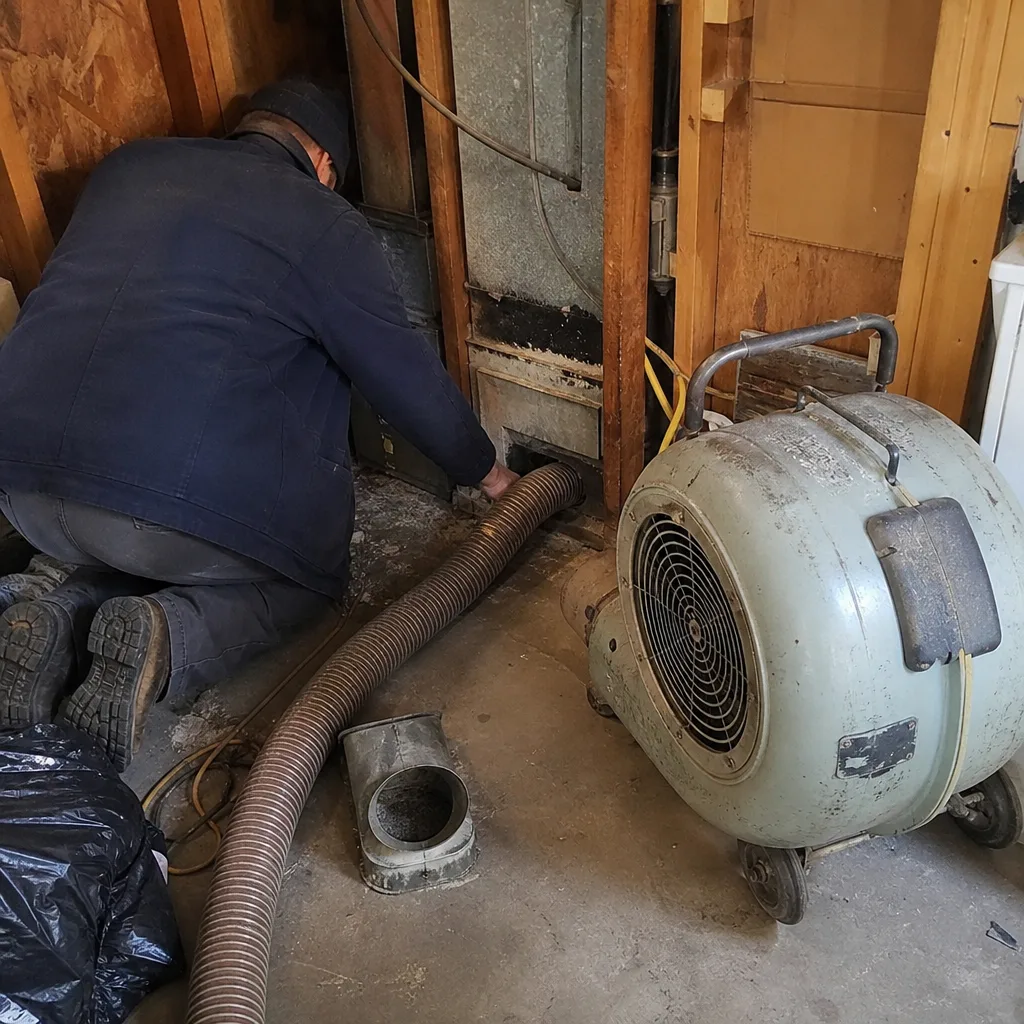 Before
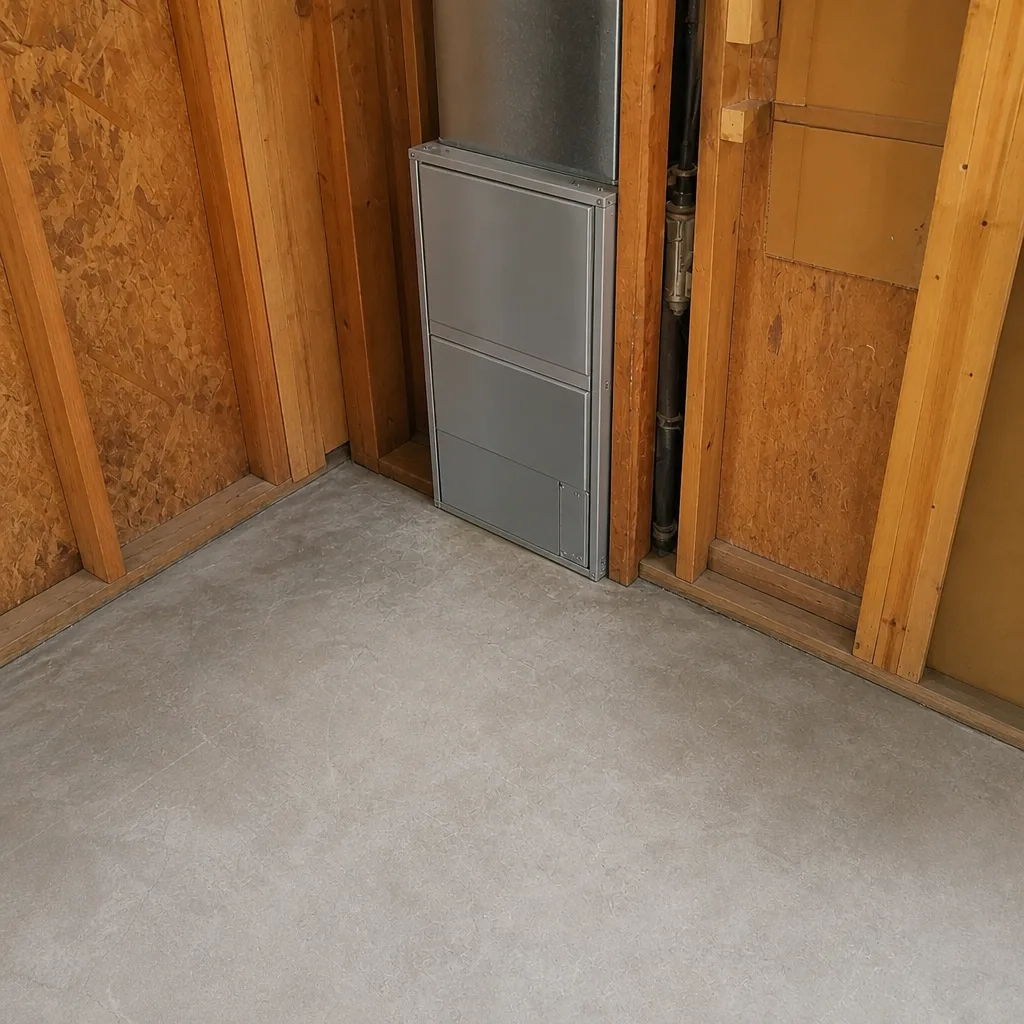 After
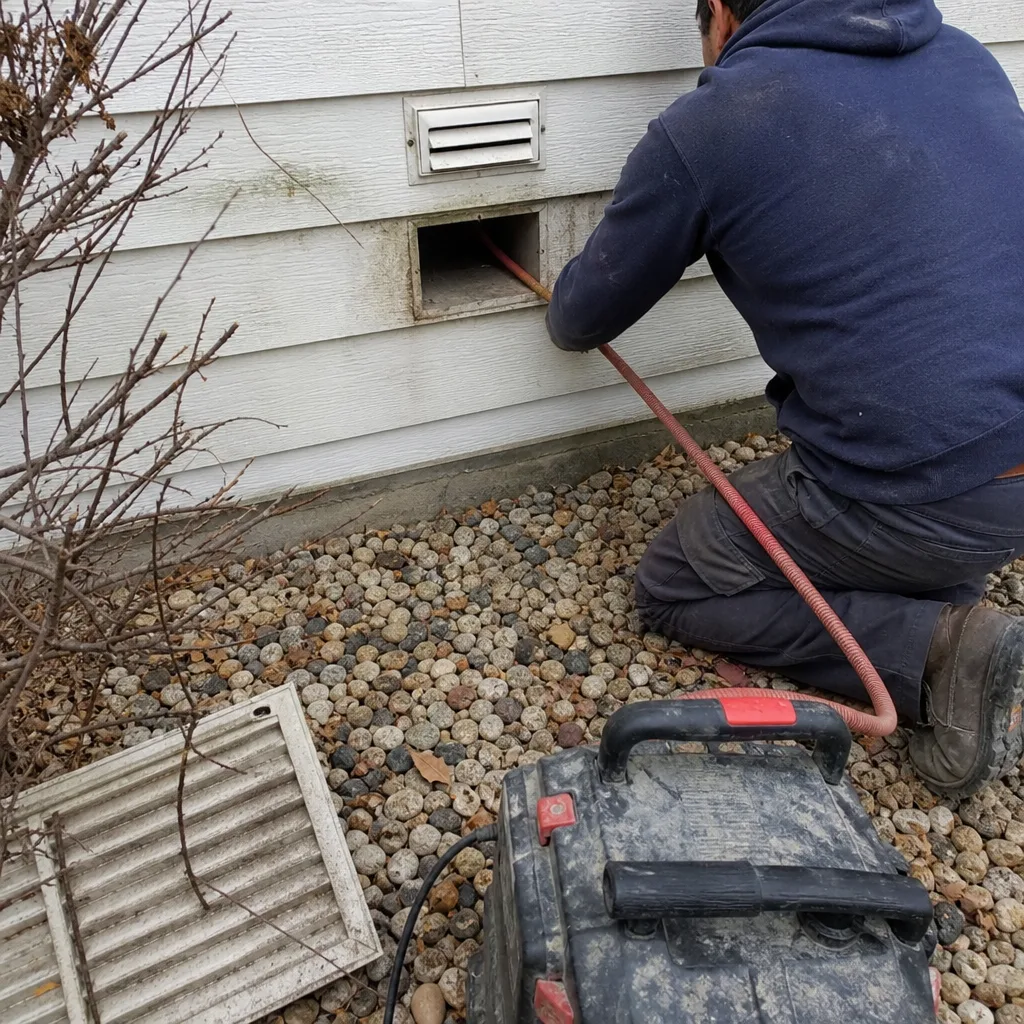 Before
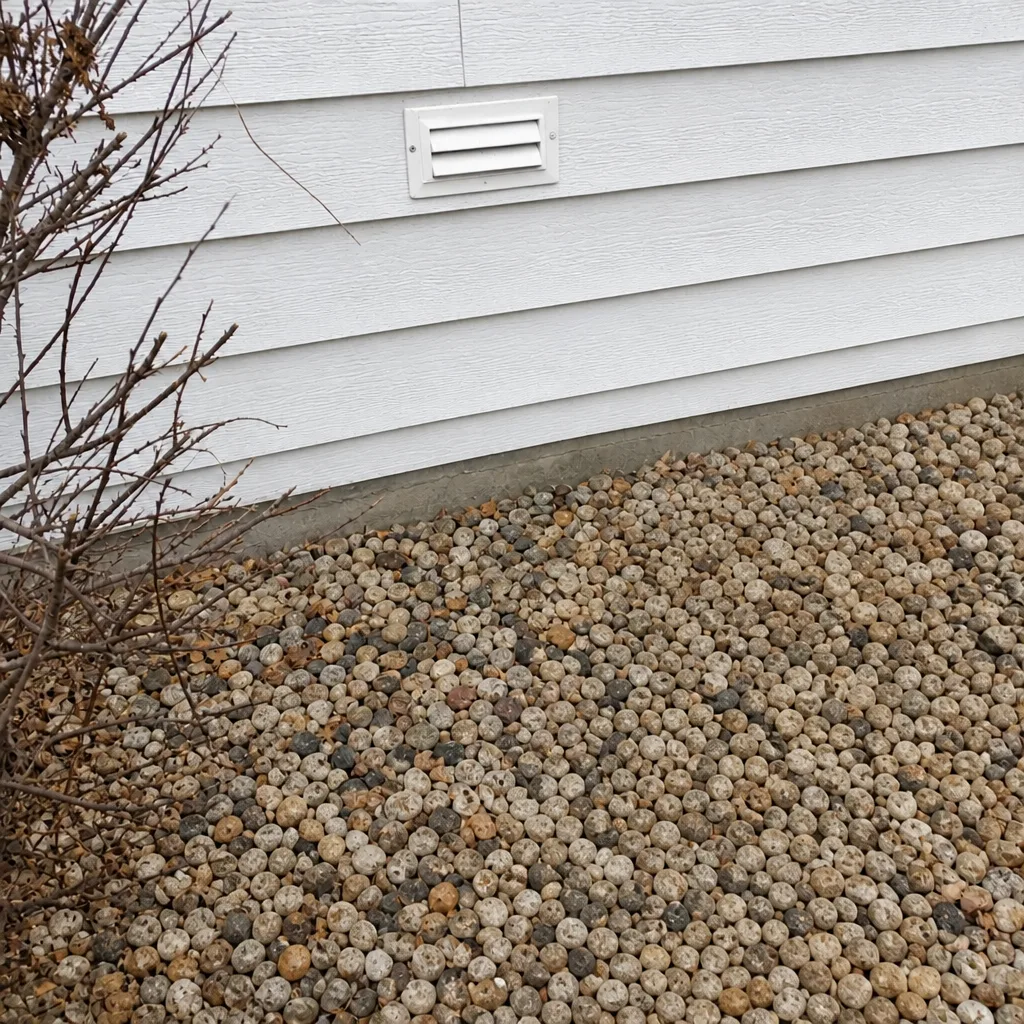 After
When to Call a Professional
Book an inspection when you can see debris discharging from a register, when airflow has dropped across multiple rooms, or when recent renovation work has introduced construction dust into the system. Water intrusion into a basement or crawlspace that shares a return duct is another trigger, and so is a dryer that takes longer than it used to or feels hot to the touch. Visible mold growth on hard surfaces inside the ductwork is a reason to have the system assessed before you use it heavily again. If you’ve found pest activity in the ductwork, call before trying to clean it yourself – that’s a containment problem, not a vacuum problem. Duct Cleaning Elgin offers free estimates in Elgin – call (855) 393-2846. We answer 24/7. Fast dispatch from 7am to 7pm, Sunday through Friday.
Frequently Asked Questions
Air duct cleaning in Elgin is typically priced as a single flat figure for the whole duct system, agreed in writing before any work begins, not as a per-vent charge added on top of a teaser price. The honest total depends on the size and layout of the system, how many branches there are, and whether repair work turns up during the inspection. Ask for the written estimate up front. Call (855) 393-2846 for an exact quote – estimates are free.
Cheaper quotes usually drop one of the three required equipment categories: the rotary contact cleaning, the HEPA-rated negative-air extraction, or the containment setup. What’s left is a single vacuum pass from one access point that moves debris around inside the ductwork rather than removing it. The job takes less time and costs less because less is being done. Call (855) 393-2846 and we’ll walk you through the process differences before you commit to anything.
You should be handed before-and-after photos of your own ducts, taken at the same access points with recognizable landmarks, and shown them at the end of the job. Nothing else substitutes cleanly. If the operator can’t produce photos of your system, or offers stock images instead, treat that as a signal about the process. Call (855) 393-2846 to see exactly how our documentation works – estimates are free.
Sometimes every few years, sometimes not for a decade, and it depends on the condition of the system rather than a set schedule. Homes with pets, recent renovation dust, or damp basements that share a return duct tend to need attention sooner. The EPA recommends cleaning on condition, not on a fixed interval, so an inspection-first approach is the right one. Call (855) 393-2846 if you’d like an honest assessment of whether your system needs it now – estimates are free.
Yes, in a specific way. Elgin’s clay-heavy soil holds moisture near foundations during wet seasons, so basement and crawlspace returns pull in damp mineral dust that clumps on duct walls instead of staying loose. Homeowners end up with bonded buildup that needs contact cleaning with a rotary brush, not just a vacuum pass. Our air duct cleaning service is built around that distinction. Call (855) 393-2846 to book an inspection – estimates are free.
Clean first, repair if needed, and treat them as connected decisions. Cleaning without repairing known leaks pulls debris back in through those same leaks, so a repair assessment at the end of the clean is the sensible order. Repair is a standalone service we offer – air duct repair addresses the structural side of the system, not just its cleanliness. Call (855) 393-2846 to discuss which order makes sense for your home – estimates are free.
The Bottom Line
A clean duct and a clean duct system are different outcomes, and the difference comes down to process. Contact cleaning with a rotary brush, HEPA-rated extraction holding negative pressure the whole time, and proper containment – three equipment categories working together – is what actually removes debris from the system rather than moving it into the next branch. Elgin’s clay-heavy soil and pre-1980 housing stock make that distinction especially important here, because bonded buildup doesn’t respond to a vacuum pass. Demand before-and-after photos of your own ducts, ask direct questions about source removal versus surface agitation, and treat the EPA guidance as a condition-based filter rather than a sales pitch. One flat price per system, agreed in writing, is the only quote structure that reflects a full-system clean.
Contact
If you’d like a free estimate on a full-system clean, or a repair assessment on a duct system that’s leaking or underperforming, we’re glad to help. Our technicians have up to 14 years of experience, we use professional-grade equipment – Rotobrush, Nikro HEPA extraction, and Abatement Technologies containment – on every job, and we agree one flat price per system before work starts, with before-and-after photos of your own ducts to verify it. Licensed and insured. Call (855) 393-2846. We answer 24/7. Fast dispatch from 7am to 7pm, Sunday through Friday. You can also read more about our Duct Cleaning Elgin process, our air duct cleaning service, our dryer vent cleaning, and the neighborhoods we cover across Elgin.
Written by the team at Duct Cleaning Elgin.