
Last updated November 16, 2026
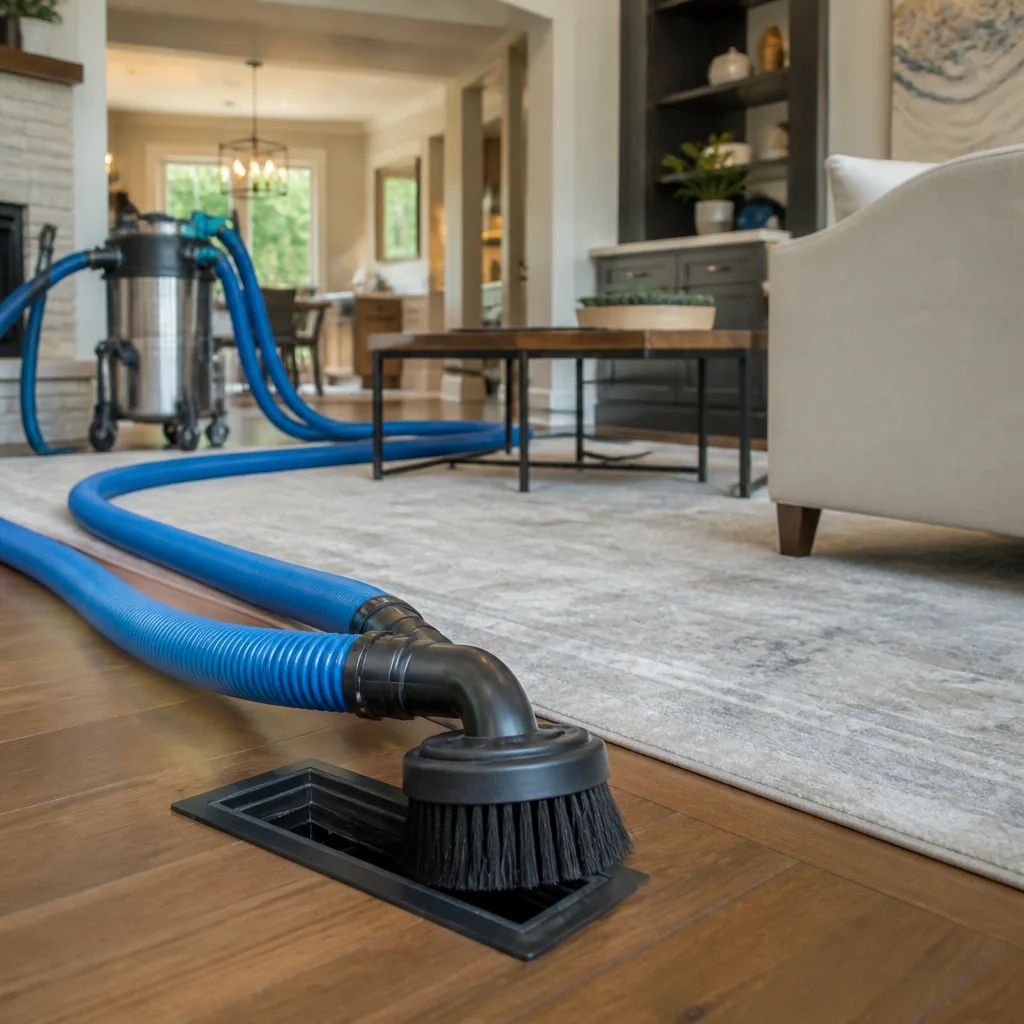 Whole-home duct cleaning
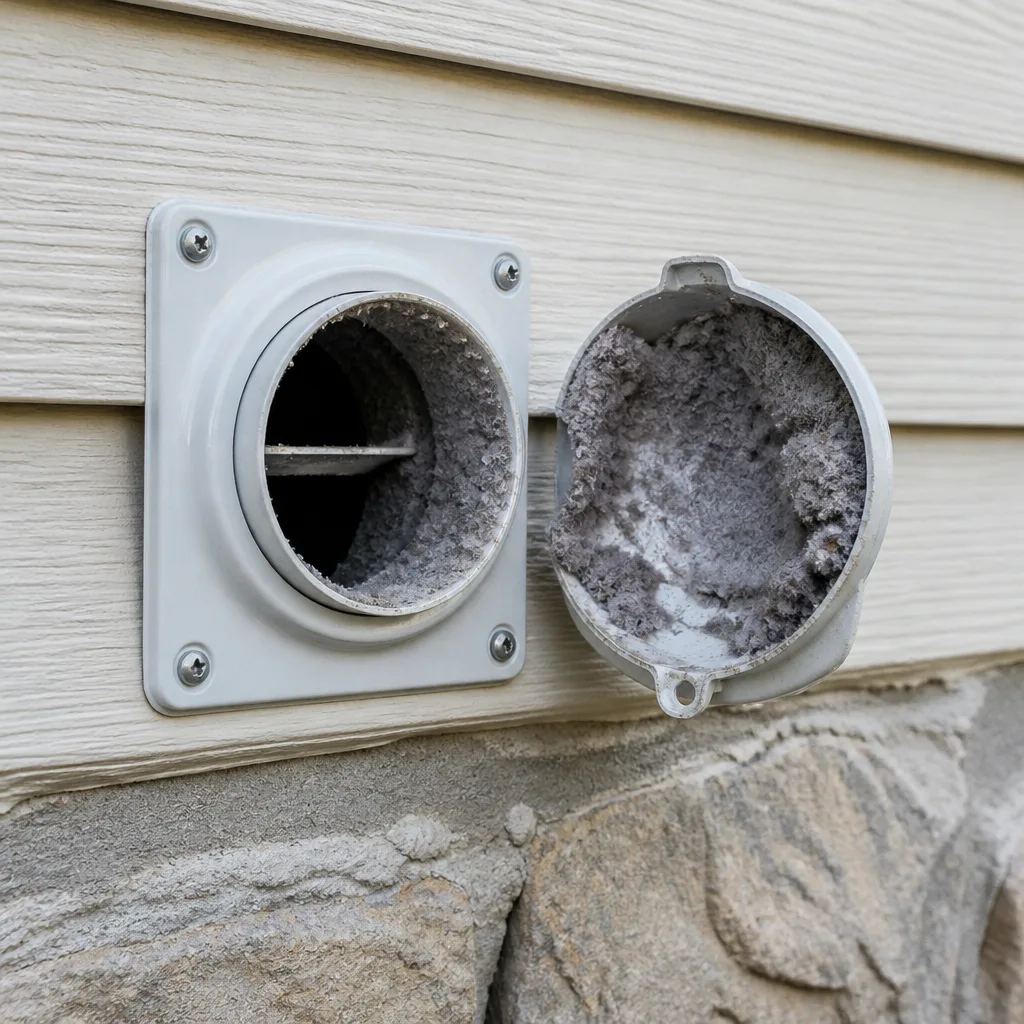 Dryer vent cleaning
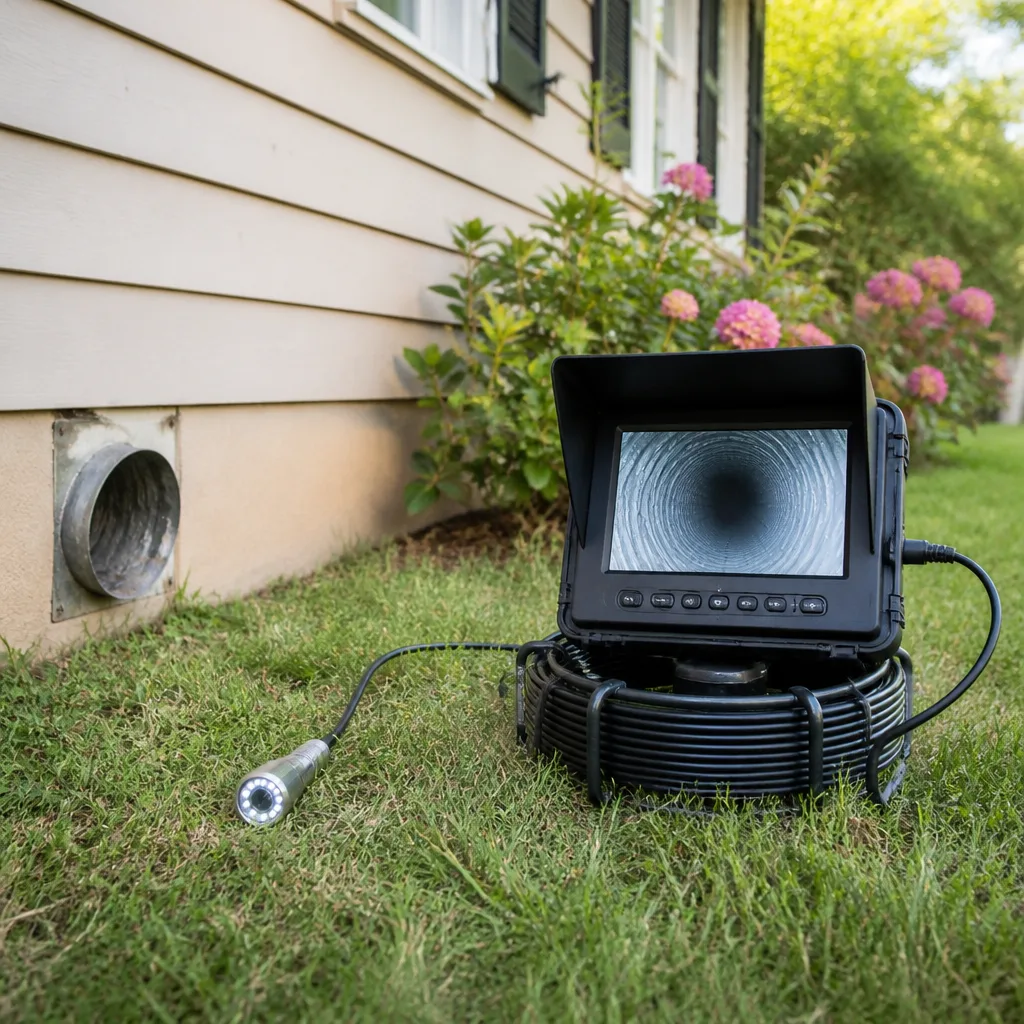 Camera inspection
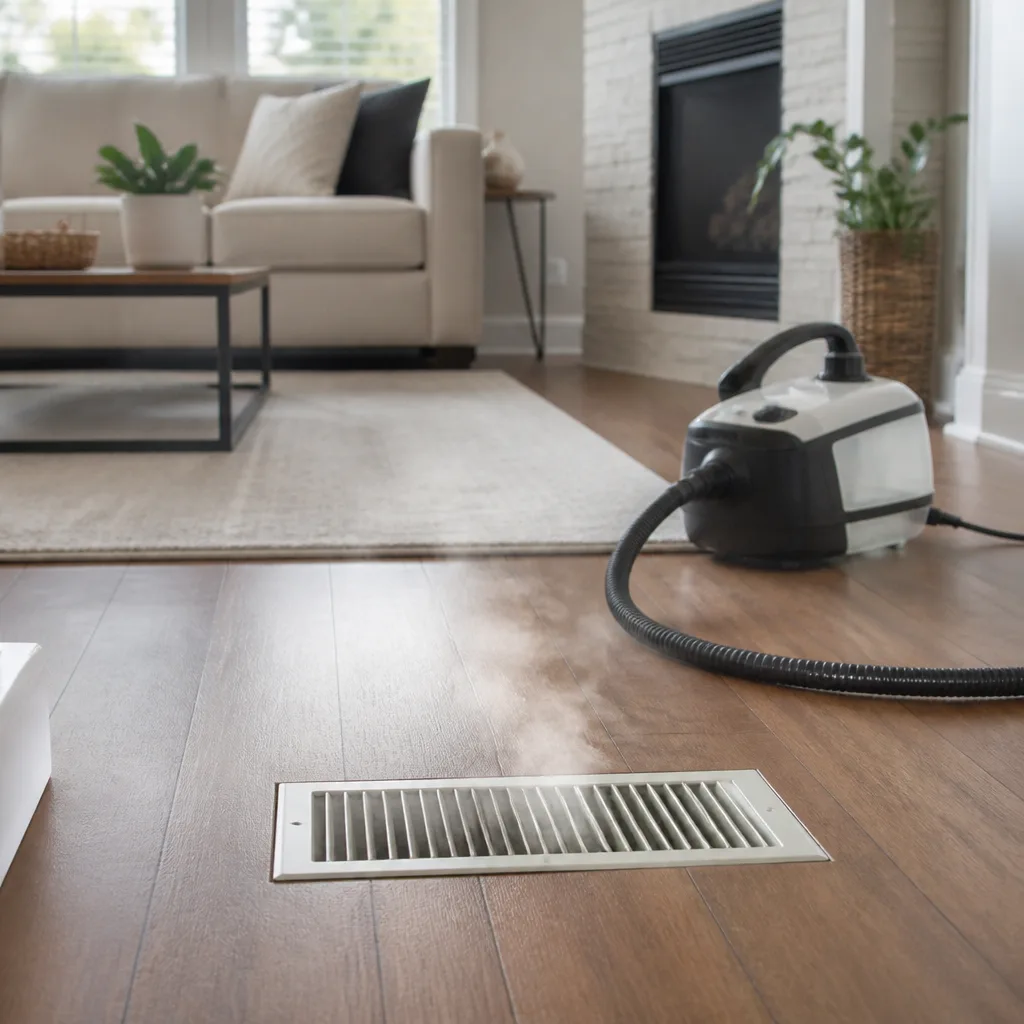 Sanitizing & deodorizing
Whole-system duct and dryer vent check with before-and-after photos - you see exactly what came out of your vents
That "$99 whole-house special" is a bait ad - the real number appears once they are in your hallway, or the "clean" is a shop-vac at the register. We photograph the inside of your ducts before and after instead.
How to Hire an Air Duct Cleaning Contractor in Elgin: A Step-by-Step Guide
Illinois doesn’t license air duct cleaning as a trade. Any company with a van and a printed flyer can legally drive to your Elgin home, run a hose into a supply register, and hand you an invoice. That’s the part most homeowners don’t know going in, and it’s the reason so many people end up paying for a service that never touched the inside of their duct system. This guide is about closing that gap. We’ll walk through the specific questions that reveal whether a contractor runs professional equipment or a shop vac in a cargo van, how to read a scope of work, what to watch for while the job is happening, and where a bargain quote quietly becomes a costlier problem. You’ll leave knowing what to ask before you book, not just what to pay.
Quick Answer
To hire an air duct cleaning contractor in Elgin, verify the equipment by brand and method, confirm the company uses contact cleaning with rotary brushes plus HEPA-rated extraction, ask for a written scope of work before the job, and insist on a walkthrough-based quote rather than a flat price quoted over the phone. The right contractor will answer equipment questions without flinching. The wrong one will steer the conversation back to price.
Styles & brands we work with
- Whole-home duct cleaning
- Dryer vent cleaning
- Camera inspection
- Sanitizing & deodorizing
Table of Contents
- Why There’s No License to Check in Illinois
- The Three Equipment Questions to Ask Before Booking
- NADCA Membership: A Floor, Not a Ceiling
- Why a Phone Quote Without a Walkthrough Is a Warning Sign
- How to Read a Scope of Work Before Work Begins
- What to Watch For During the Job Itself
- The Dryer Vent Question Most Homeowners Forget
- When Cleaning Isn’t Enough: Duct System Repair
Why There’s No License to Check in Illinois
In a licensed trade, you can look up a contractor and see whether the state has vetted them. In duct cleaning, that safety net doesn’t exist in Illinois. There’s no statewide licensing board for the work, which means the burden of vetting falls entirely on the homeowner. That’s not a reason to panic. It’s a reason to know what to check instead.
What you can check, you should check. Ask for proof of general liability insurance and workers’ compensation coverage. Ask whether the company carries a business registration. Ask what happens if something in the duct system gets damaged during the job. A legitimate operator has answers ready because they get asked. A blow-and-go outfit dodges or changes the subject. In our experience across Elgin neighborhoods, from the older housing stock near downtown to newer construction on the west side, the difference between a real contractor and a van with a vacuum is almost always visible in how they handle the pre-job conversation.
There’s a second layer to this. Even when a company is insured, what matters is whether the work is done to a recognized standard. That’s where equipment and process come in, and it’s the subject of the next section. The licensing gap means the questions you ask about equipment aren’t optional. They’re the primary filter.
The Three Equipment Questions to Ask Before Booking
You don’t need to become an equipment expert to vet a contractor. You need three questions, and you need to recognize what a real answer sounds like. A specialist who runs professional-grade systems will name the brands and explain the method without hesitation.
- “What cleaning method do you use – contact cleaning or source removal?” Acceptable answer: contact cleaning with a rotary brush system. The brush physically agitates and scrubs buildup off the duct walls. A company that only vacuums from a single access point is cleaning the air, not the system. Our technicians use the Rotobrush rotary-brush system on every job because it’s a contact method: the brush reaches surfaces, not just the airflow.
- “What kind of vacuum captures the debris?” Acceptable answer: a HEPA-rated extraction system. Debris dislodged by a brush has to go somewhere, and a shop vac or a low-grade vacuum redistributes it into your living space. We deploy Nikro HEPA-rated extraction equipment, which is the same industrial standard used in mold and asbestos remediation. That’s the standard you’re entitled to ask about.
- “What containment do you use?” Acceptable answer: a remediation-grade approach that keeps dust and debris contained rather than swirling through the house. We carry Abatement Technologies equipment, a remediation-grade air quality brand that you rarely see on residential duct cleaning jobs. When a contractor can name their containment gear, they’ve thought about where the dust goes.
If a company can’t answer any of these three, or answers vaguely with words like “industrial-strength” and “top of the line,” that’s your signal. The right answer is specific, and it’s a brand name.
NADCA Membership: A Floor, Not a Ceiling
The National Air Duct Cleaners Association, or NADCA, is the trade body that publishes recognized standards for the work. Membership signals that a company has agreed to a code of ethics and stays current on the standards NADCA produces. It’s a useful floor. It is not proof that any particular job will be done to that standard, and it does not tell you what equipment a company actually runs.
Here’s what NADCA membership does verify. It confirms the company has made a formal commitment to the industry’s professional standards. It tells you the company belongs to a body that expects a certain level of process. It does not verify the quality of the crew that shows up at your door, the equipment on the van, or the depth of the walkthrough. A contractor can be a member and still cut corners on a Tuesday afternoon.
So use membership as a starting filter, not a finish line. Ask whether the company follows the NADCA standard for the work, and then ask the equipment questions above. In Elgin, we tell homeowners the same thing: verify membership, then verify equipment. Membership is paperwork. Equipment and method are what actually gets done in your home. If a company passes both checks, you’re looking at a real specialist. If they pass one and flunk the other, keep looking.
Why a Phone Quote Without a Walkthrough Is a Warning Sign
A price quoted over the phone before anyone has seen your home is a guess wearing a price tag. Duct systems vary widely: square footage, number of registers, number of zones, the length of trunk runs, how accessible the air handler is, and how much buildup is present all affect the job. Any contractor who quotes you a firm number before doing that assessment is either planning to pad the invoice on site or planning to do a surface-level job that fits the quote.
What a walkthrough should include:
- Counting and identifying every supply and return register, not just the obvious ones
- Locating the air handler and checking access to the main trunk
- Noting any flex duct runs, transitions, or tight spaces that affect the work
- Assessing visible buildup and any signs of leakage, disconnection, or damage
- Confirming the scope in writing before the job starts
The walkthrough also gives you a chance to listen. A contractor who walks the home and talks through what they see is showing you their process. That conversation is the most useful part of the visit. In Elgin, where basements often hold the air handler and the duct runs climb into the upper floors, that assessment matters more than it would in a single-level build.
How to Read a Scope of Work Before Work Begins
A scope of work is a short written document that says exactly what will be done. It’s not a sales brochure. It’s the list a tech works from, and it protects you if the job doesn’t match the promise. Ask for it before you book, and read it before the crew arrives.
A real scope answers five questions:
- Which parts of the system? Does it cover supplies, returns, the air handler, the plenum, the main trunk, and the branch runs? A scope that says “ducts” without a list is a scope you can’t hold anyone to.
- What method? Contact cleaning with a rotary brush system should be named. If it says “vacuum only,” ask why.
- What equipment? HEPA-rated extraction should be in writing. Containment equipment should be in writing.
- What’s excluded? Duct repair, dryer vent cleaning, air quality accessory work, and any sanitizing service should be spelled out separately. If a contractor bundles add-ons without listing them, ask what’s included and what’s extra.
- What’s the price? One flat price per system, agreed before work starts. No per-vent pricing and no line items that change on site.
If a contractor won’t put the scope in writing, that’s a hard stop. Scope documents exist because both sides benefit. A company confident in its process has no reason to refuse.
What to Watch For During the Job Itself
The vetting doesn’t end when the crew arrives. A careful homeowner watches three things during the job: hygiene, process, and verification. Each one tells you whether you’re getting contact cleaning or a cosmetic pass.
Hygiene. Before the crew starts, ask where the vacuum connects and confirm the containment setup is in place before any brush spins. If dust starts drifting through the house within the first few minutes, stop the job. A properly contained system doesn’t leak into the living space.
Process. The rotary brush should make visible passes along each run. Ask the tech to confirm the brush is rotating and reaching surfaces, not just sitting in the airflow. A real contact-cleaning job takes time because the brush has to travel each run. If the whole job finishes in under an hour on a three-bedroom Elgin home with a basement air handler, that’s a flag you should raise.
Verification. Negative air pressure is your proof the vacuum is actually pulling, not pushing. Before-and-after photos of your own ducts are the second proof. Ask for both. A contractor confident in the work will hand over photos without being asked. A blow-and-go outfit won’t offer them because they don’t have them.
If something looks wrong mid-job, say so. Any contractor worth hiring will stop and explain the setup. If they won’t, you know what you’re dealing with.
The Dryer Vent Question Most Homeowners Forget
Duct cleaning and dryer vent cleaning are two different jobs with two different risk profiles, and homeowners routinely hire one and forget the other. The U.S. Fire Administration identifies dryer vent lint buildup as the leading cause of clothes-dryer fires. That makes the dryer vent a fire-safety item, not a maintenance afterthought, and it deserves its own line on your hiring list.
Ask any contractor who cleans ducts whether they also handle the dryer vent. Ask specifically: do they run a brush the full length of the vent, and do they verify airflow at the exterior termination? A dryer vent that’s been vacuumed at the interior opening only hasn’t been cleaned. The lint that causes fires collects along the run and at the exterior flap. If a contractor can’t describe how they handle the full vent length, they’re not set up for this part of the job.
In Elgin, where many homes have long dryer vent runs through basements or interior walls before reaching an exterior wall, the run length matters more than homeowners expect. Elgin’s housing stock includes a lot of older homes with vent runs that predate modern appliance standards, which makes regular cleaning of that run a practical safety matter rather than an upsell. If you want dryer vent work handled by the same team that cleans your ducts, that’s a natural pairing, and we handle both.
When Cleaning Isn’t Enough: Duct System Repair
Cleaning the duct system only solves half the problem if the system is leaking. A cleaned duct with unsealed joints, disconnected flex runs, or crushed sections pulls contaminants in from the crawlspace or basement and pushes conditioned air into spaces you’re not heating or cooling. That’s why duct system repair belongs in the hiring conversation alongside cleaning, not as an afterthought.
Signs a system needs repair, not just cleaning:
- Visible disconnections at flex duct joints or transitions
- Crushed or pinched flex runs behind walls or in tight closets
- Air leaking at the plenum or main trunk joints
- Uneven airflow between rooms that cleaning alone doesn’t fix
- Dust returning quickly after a cleaning
We offer air duct repair as a standalone service, which most duct cleaning companies don’t, because cleaning without addressing structural integrity leaves the efficiency problem in place. If your walkthrough turns up damage, ask for it to be included in the scope, priced separately, and confirmed before work starts.
If you’re still narrowing down contractors, this duct cleaning Elgin resource is a good starting point. For a closer look at the cleaning process itself, see our guide to air duct cleaning, and for the fire-safety side of the system, the dryer vent cleaning page explains what full-length cleaning involves. Elgin homeowners comparing local contractors can also Elgin start here for service context.
Common Mistakes to Avoid
- Booking on price alone. A quote far below the local range almost always means vacuum-only work or a bait-and-switch invoice once the tech is inside. Ask the equipment questions before you compare prices, because you’re not comparing the same service.
- Accepting a phone quote as a firm price. Any number given before a walkthrough is a placeholder. A real contractor quotes after seeing the system, not before, because square footage and register count change the job.
- Skipping the scope of work. If the job isn’t in writing, the crew can do less than you expected and call it complete. Insist on a written scope with inclusions, exclusions, and a flat price per system.
- Forgetting the dryer vent. Duct cleaning and dryer vent cleaning are separate services, and the dryer vent is a fire-safety item the U.S. Fire Administration tracks as the leading cause of clothes-dryer fires. Don’t clean the ducts and skip the vent.
- Not asking about containment. Equipment that dislodges debris without HEPA-rated capture redistributes it into your home. Ask what vacuum the contractor uses and whether containment equipment is on the job.
- Ignoring signs of duct damage. Cleaning a system with crushed or disconnected runs leaves the energy loss in place. Ask for a repair assessment, and expect it to be quoted separately.
- Not asking for before-and-after photos. Photos of your own ducts are the simplest proof the work happened. A contractor who won’t show them has something to hide.
See the difference
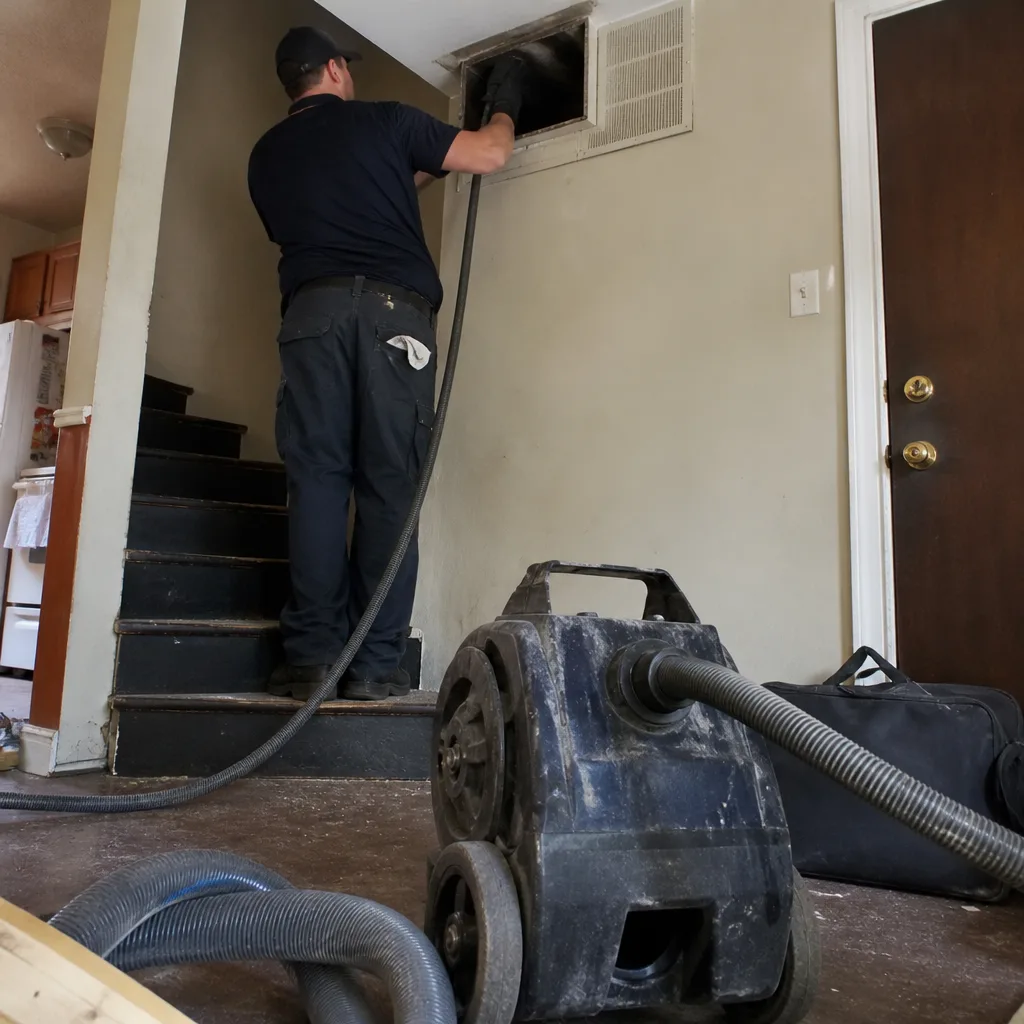 Before
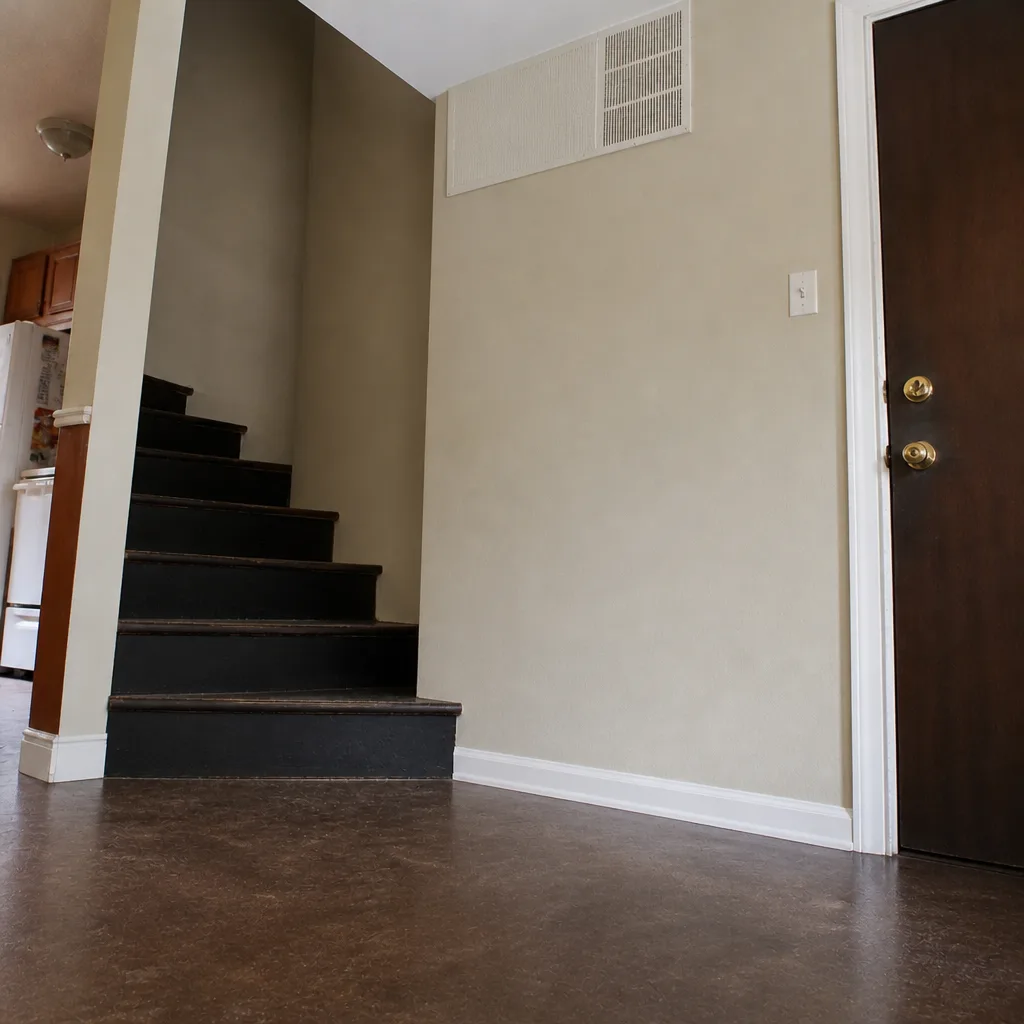 After
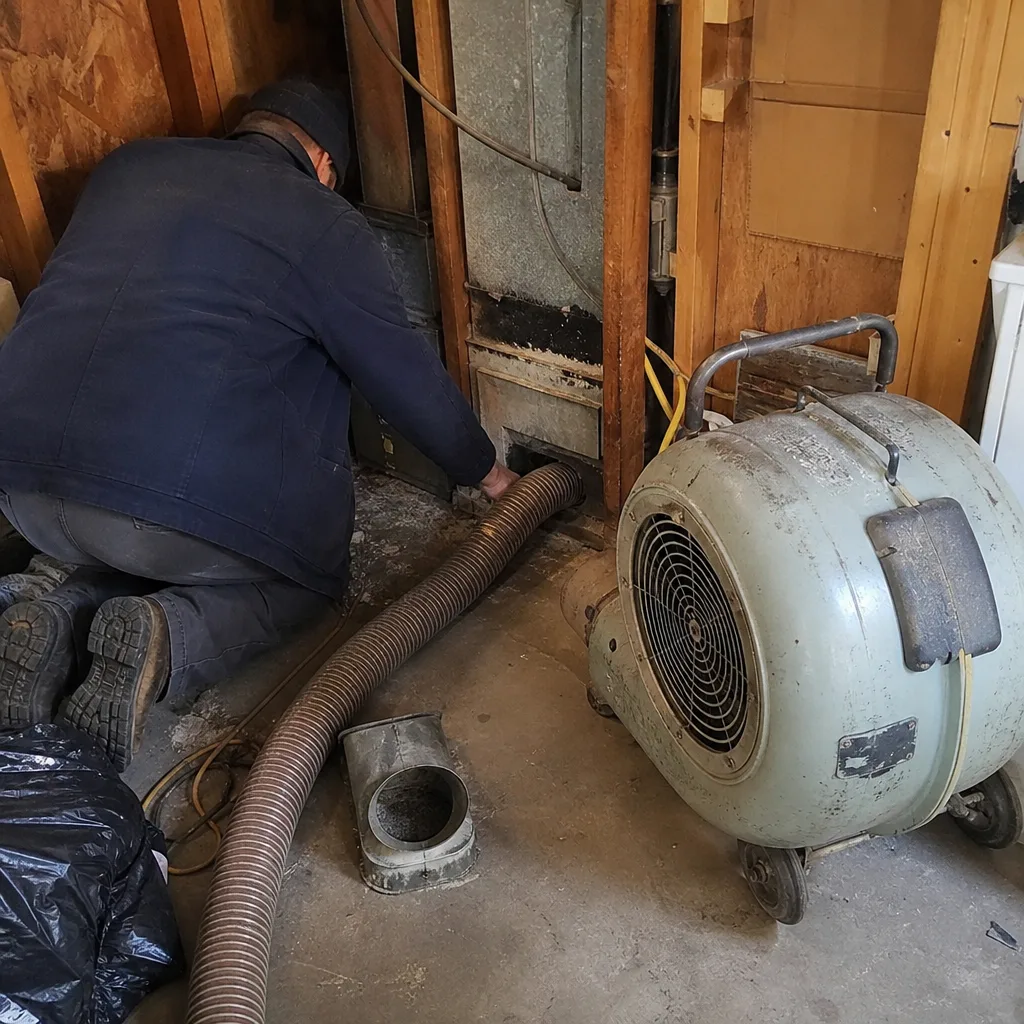 Before
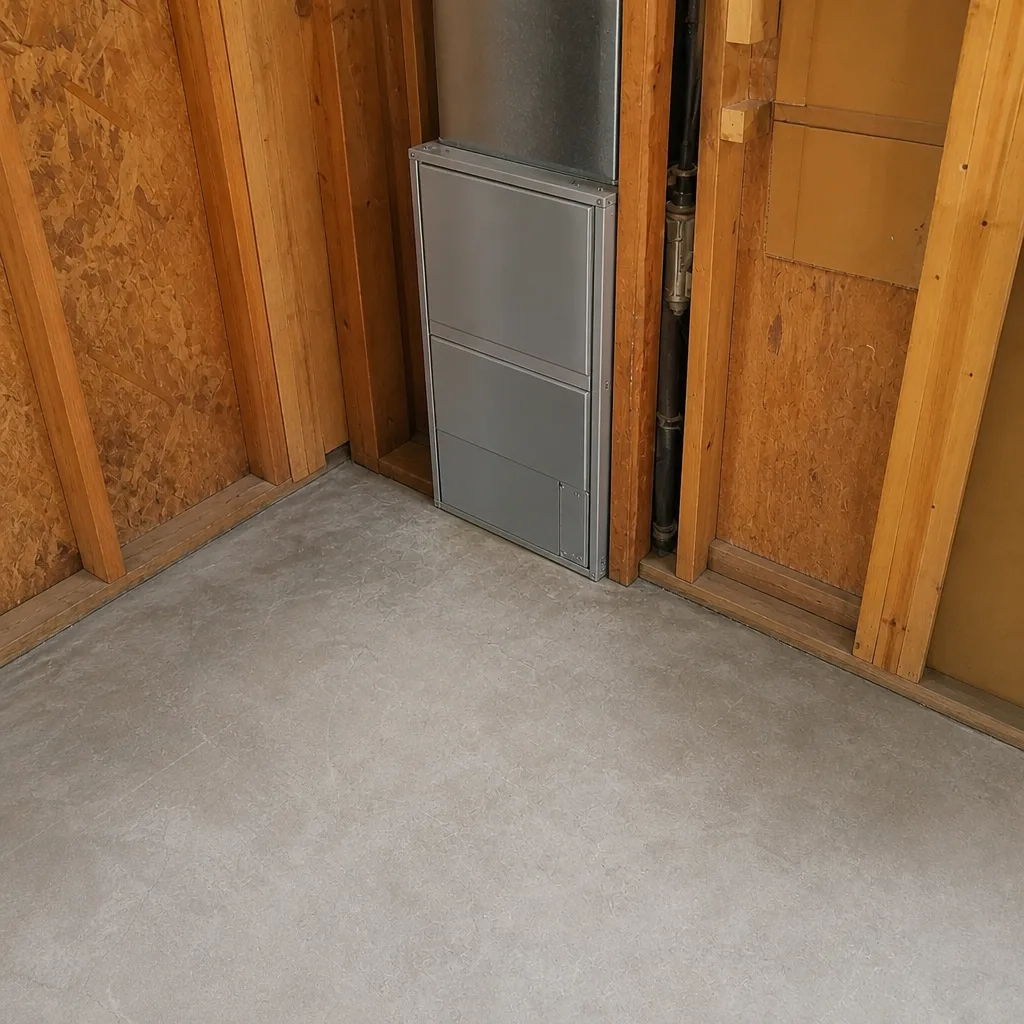 After
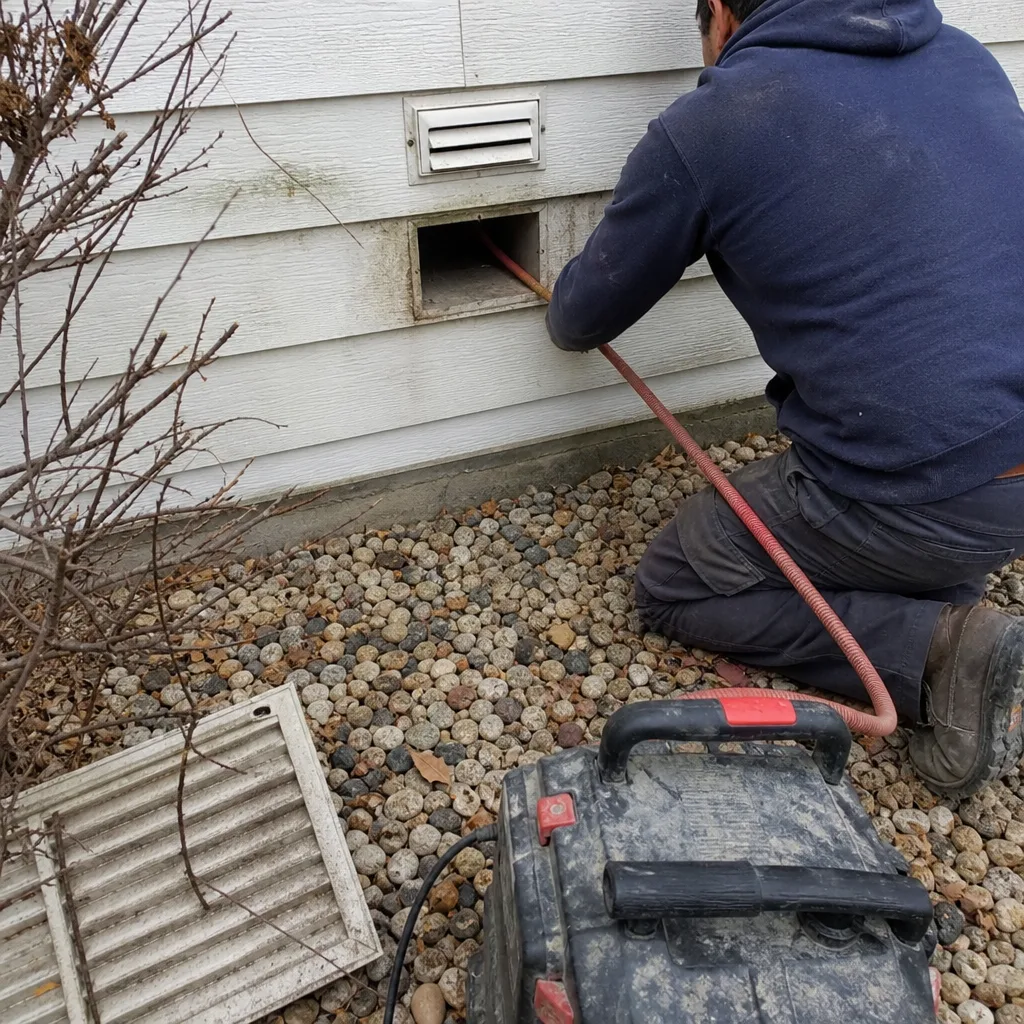 Before
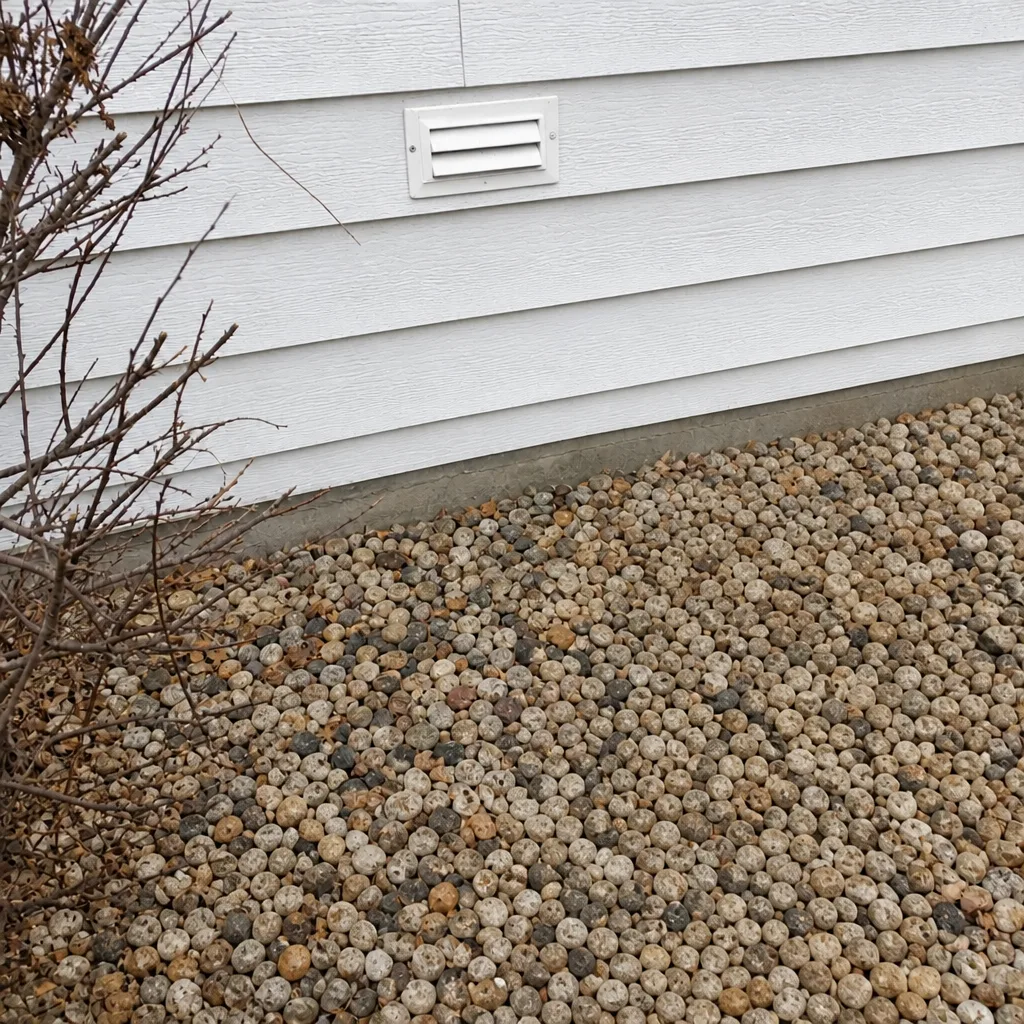 After
When to Call a Professional
You should call a professional duct cleaning contractor in Elgin when you notice visible dust blowing from supply registers shortly after cleaning filters, when airflow between rooms has become noticeably uneven, when anyone in the home is sensitive to airborne dust, or when it’s been long enough since the last cleaning that you’re not sure it was ever done. You should also call when a walkthrough turns up damaged, crushed, or disconnected duct runs, because cleaning a compromised system wastes the money you spend on it. And you should call if the dryer vent hasn’t been cleaned in recent memory, since lint buildup along the run is the fire-risk case the U.S. Fire Administration tracks. Duct Cleaning Elgin offers free estimates in Elgin. Call (855) 393-2846. We answer 24/7. Fast dispatch from 7am to 7pm, Sunday through Friday.
Frequently Asked Questions
Air duct cleaning is priced per system, not per vent, and the price is set by a written estimate after a walkthrough of the home. A phone-quoted number is a placeholder, not a real price, because the job varies with square footage, register count, trunk length, and how accessible the air handler is. The written estimate is the final price, and you should see it before work begins. Call (855) 393-2846 for an exact quote. Estimates are free.
Cheap quotes usually reflect one of three shortcuts: vacuum-only cleaning from a single access point instead of contact cleaning with a rotary brush, a consumer-grade vacuum instead of HEPA-rated extraction, or a teaser price that expands on site once the tech is inside. The equipment itself costs the contractor money, so a quote that doesn’t cover the equipment tells you what’s actually coming. Call (855) 393-2846 to talk through what a real scope includes.
Ask for two things: before-and-after photos of your own ducts and confirmation of negative air pressure during the job. Photos show what was reached and removed. Negative air verification proves the vacuum was pulling rather than pushing. A contractor running professional equipment hands both over without being asked. Call (855) 393-2846 to book a walkthrough and see the process laid out in writing.
No, NADCA membership is voluntary and Illinois does not license duct cleaning as a trade. Membership is a useful starting filter because it confirms a commitment to the industry’s published standards, but it doesn’t verify the equipment on the van or the crew that shows up. Pair the membership check with the equipment questions about contact cleaning and HEPA extraction. Call (855) 393-2846 if you’d like to compare what we run against any quote you’ve received.
There’s no universal interval. It depends on the home: pets, recent renovation, the age of the duct system, and whether the system has leaks that pull in contaminants all change the timing. A walkthrough is the only reliable way to know whether your Elgin home is due. If you’ve had renovation work or noticed dust returning quickly after filter changes, it’s worth a look. Call (855) 393-2846 to schedule a free estimate.
Yes, we can quote cleaning and duct repair together, and repair is priced separately in the written scope so you can see both lines. Cleaning a system with crushed or disconnected runs leaves the efficiency loss in place, which is why a repair assessment belongs in the same walkthrough. Call (855) 393-2846 to have both looked at before anything is booked.
The Bottom Line
Hiring a duct cleaning contractor in Elgin comes down to vetting, not shopping. Illinois doesn’t license the trade, so the questions you ask determine what you get. Verify the method (contact cleaning with a rotary brush), verify the vacuum (HEPA-rated extraction), verify the containment (remediation-grade equipment), insist on a walkthrough before a quote, read the scope before work starts, and watch the job for negative air verification and before-and-after photos. Pair duct cleaning with dryer vent cleaning and a duct repair check, and you’ll cover the whole system. The right contractor answers every one of those questions without flinching. The wrong one changes the subject back to price.
If you’re ready to talk through a walkthrough and a written scope, call Duct Cleaning Elgin at (855) 393-2846 for a free estimate. We answer 24/7. Fast dispatch from 7am to 7pm, Sunday through Friday.
Written by the team at Duct Cleaning Elgin.