
Last updated November 16, 2026
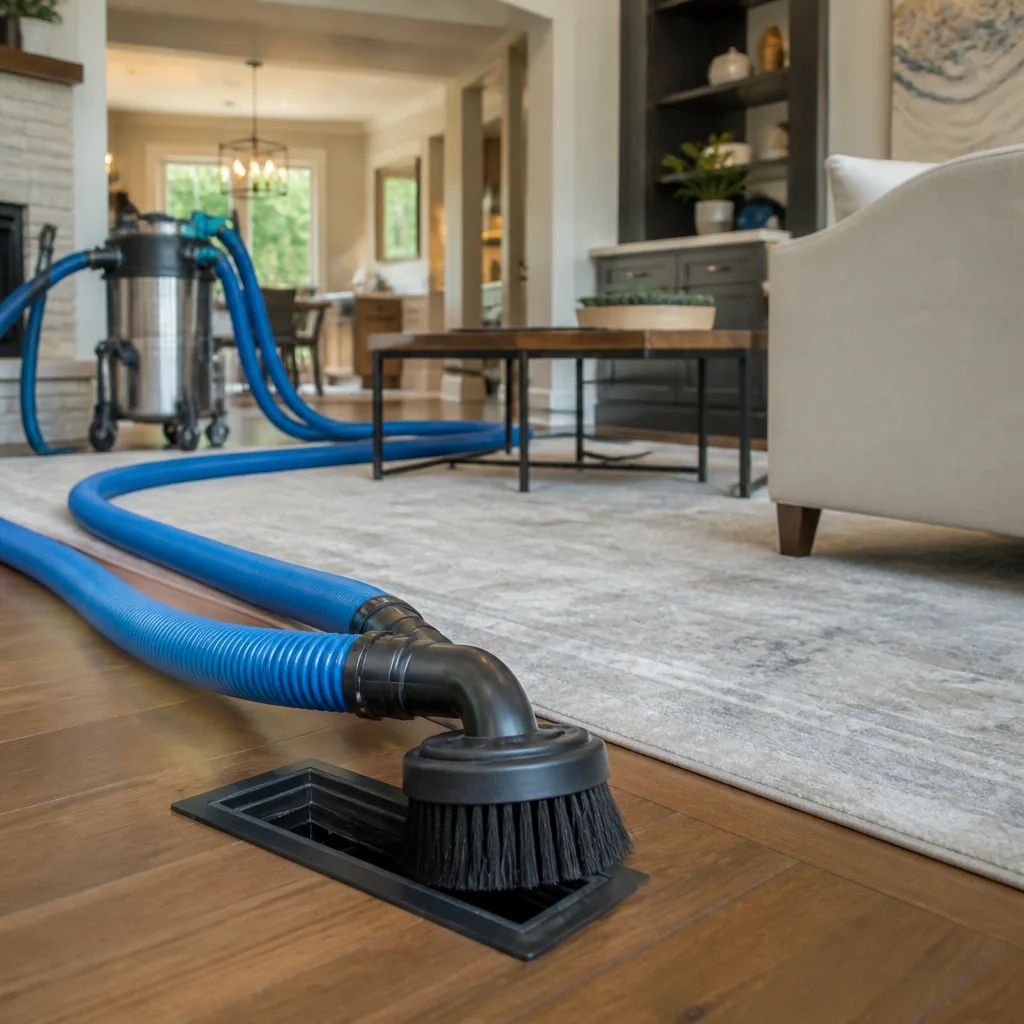 Whole-home duct cleaning
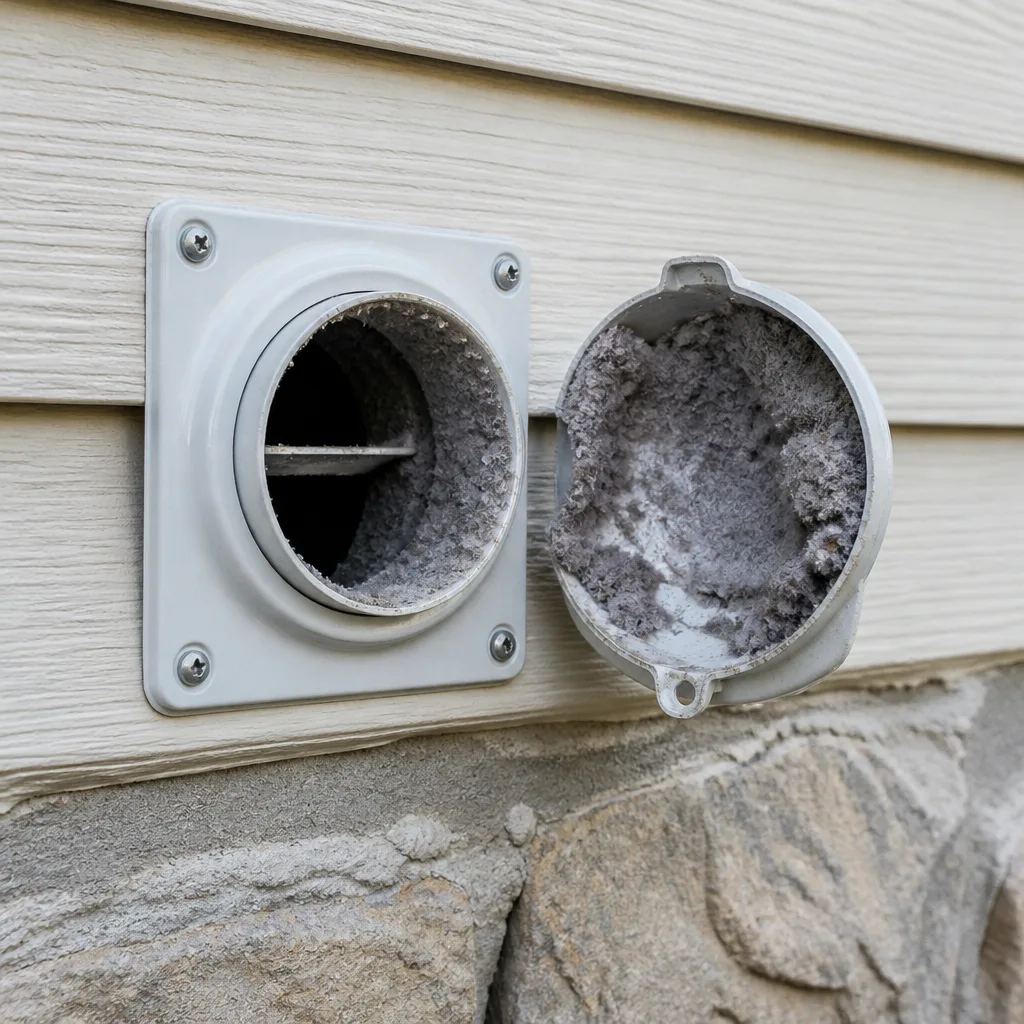 Dryer vent cleaning
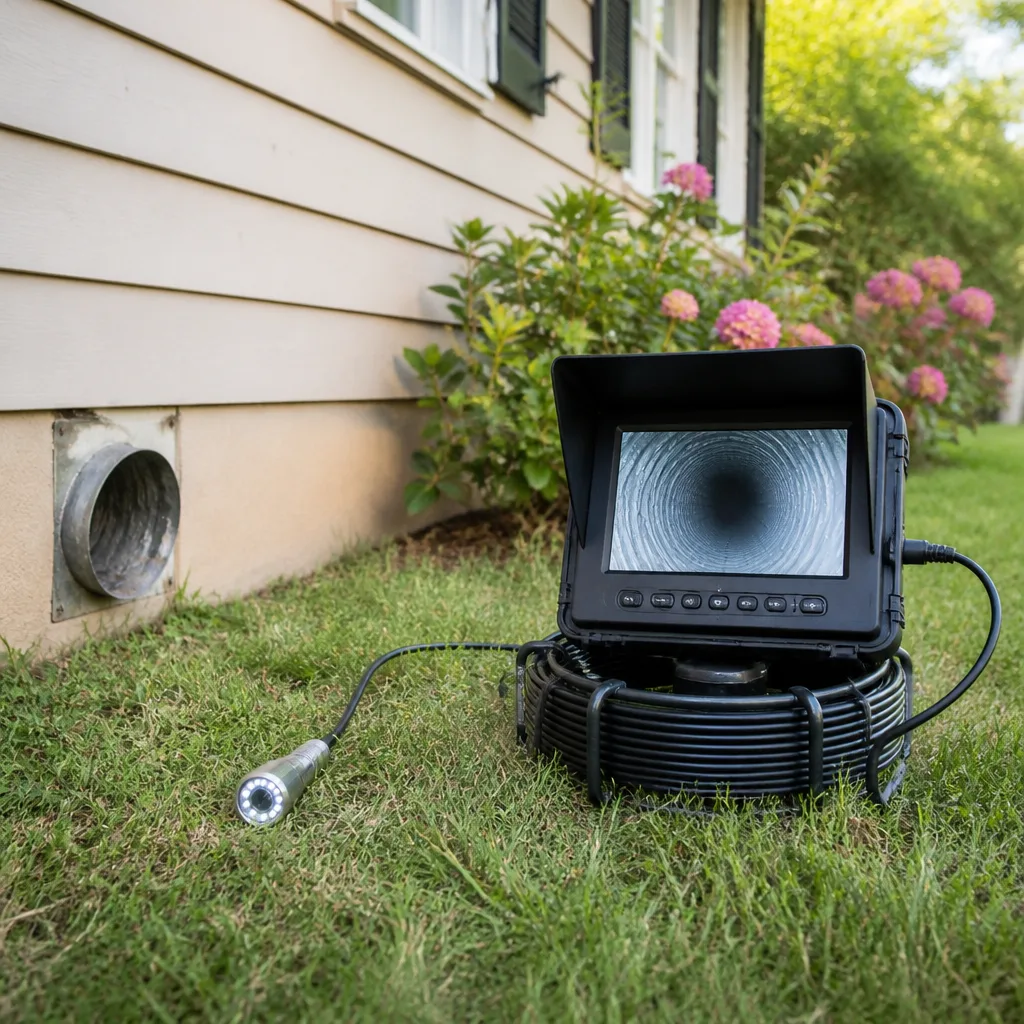 Camera inspection
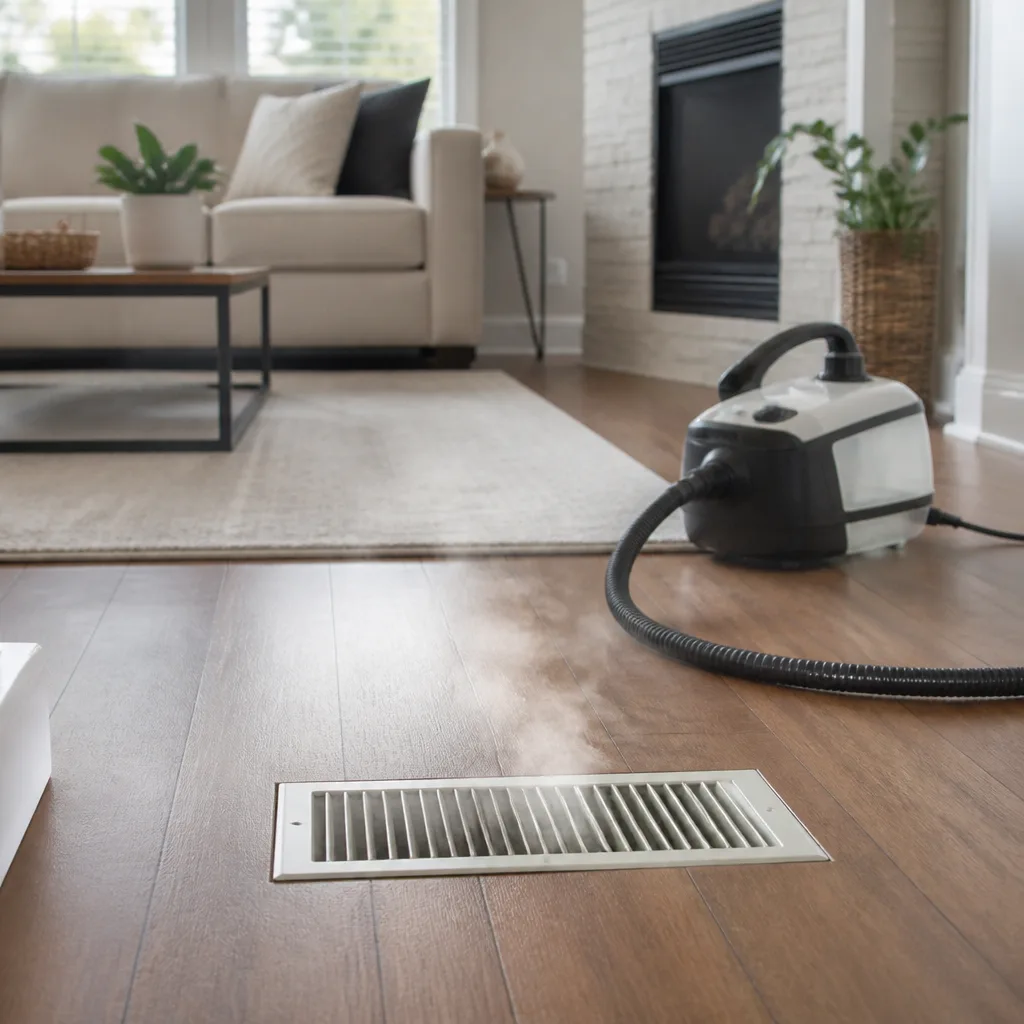 Sanitizing & deodorizing
Whole-system duct and dryer vent check with before-and-after photos - you see exactly what came out of your vents
That "$99 whole-house special" is a bait ad - the real number appears once they are in your hallway, or the "clean" is a shop-vac at the register. We photograph the inside of your ducts before and after instead.
Choosing the Right Air Duct Cleaning Brand: A Buyer’s Guide for Elgin
Most homeowners in Elgin choose a duct cleaning company the way they choose a restaurant: by review count and price. That’s understandable. Duct work is invisible, the industry has a reputation problem, and nobody wants to spend an afternoon comparing equipment they’ve never heard of. But reviews and price tell you almost nothing about what will actually happen inside your walls. A five-star rating doesn’t reveal whether the technician will arrive with a rotary brush system or a shop vac with a hose taped to it. A low quote doesn’t tell you whether the debris loosened from your ducts will be captured or pushed into your living room.
The better question is simpler: what equipment will be in the truck, and does the technician know how to use it? This guide walks through the professional-grade brands that show up in serious duct cleaning work – Rotobrush, Nikro, and Abatement Technologies – and explains what each one is built to do. By the end you’ll know what to ask, what to listen for, and how to tell a real specialist from a name-dropper.
Quick Answer
The right air duct cleaning brand for an Elgin home is one that uses contact cleaning equipment (Rotobrush rotary brush systems), HEPA-rated negative air extraction (Nikro), and remediation-grade containment tools (Abatement Technologies) – not a single van-mounted vacuum. A contractor who owns only one of these systems is completing only part of the job, which is why equipment inventory matters more than review count.
Styles & brands we work with
- Whole-home duct cleaning
- Dryer vent cleaning
- Camera inspection
- Sanitizing & deodorizing
Table of Contents
- Why One Tool Is Never Enough
- What Rotobrush Systems Are Actually Designed For
- Nikro and the Case for HEPA-Rated Negative Air Extraction
- Abatement Technologies: When a Job Needs Containment, Not Just Cleaning
- Equipment Ownership vs. Rental: What It Signals
- Questions to Ask Any Contractor About Their Equipment
- What’s Different About Duct Cleaning in Elgin
- Red Flags in a Duct Cleaning Pitch
Why One Tool Is Never Enough
A duct cleaning job has at least three distinct phases, and each one demands a different piece of equipment. First, the buildup bonded to the duct walls has to be physically loosened. Second, the loosened debris has to be captured and removed without spreading through the house. Third, if the system has contamination beyond ordinary dust – mold spores, smoke residue, fine particulate – the work area has to be contained and filtered so the contamination doesn’t migrate.
Rotobrush handles phase one. Nikro HEPA extraction handles phase two. Abatement Technologies equipment handles phase three. Three tools, three jobs.
A contractor who runs a single truck-mounted vacuum through one access point and calls it done is doing phase two only, and often poorly. The duct walls stay coated. The supply registers might look cleaner. The return plenum might still hold the same debris that was there before. This is what people mean when they describe “blow-and-go” duct cleaning – it moves air, not buildup.
In our experience working on duct systems across Elgin, the most common complaint from homeowners who had prior cleaning done elsewhere is that nothing felt different afterward. Same dust on the furniture. Same musty smell in the hallway. That’s what happens when only one of the three phases gets addressed. If you want to understand the whole-system approach in more detail, our air duct cleaning page walks through the full sequence from setup to post-cleaning inspection.
The point isn’t to insist that every job is complicated. Some duct systems are lightly soiled and only need contact cleaning plus HEPA extraction. But a contractor can’t tell you which category your home falls into until they’ve looked at the duct material, the number of branches, the return configuration, and the condition of the registers and returns. A brand that only owns a vacuum can’t offer you a choice. It only has one answer to every question.
What Rotobrush Systems Are Actually Designed For
Rotobrush is a rotary brush system designed for continuous contact cleaning with simultaneous vacuum. The brush head rotates inside the duct, agitating the walls while a hose pulls the loosened material into a collection unit. It’s the industry-recognized contact-cleaning technology used by professionals nationwide, and it’s the tool that distinguishes real duct cleaning from air movement.
The key word is contact. A vacuum alone creates negative pressure and pulls loose debris off surfaces. It cannot dislodge buildup that has adhered to the duct wall. You’ve seen what happens when a vacuum passes over a dusty shelf – most of the dust lifts, but a film remains. Inside a duct running constant airflow for years, that film is thicker and more bonded. Rotary brushing physically removes it.
Rotobrush systems outperform air whips in several specific duct configurations:
- Flexible round duct – the brush follows the corrugations and scrubs the ridges where dust collects in layers.
- Sheet metal rectangular trunk lines – the brush head contacts the flat surfaces and the seams, which air whips rarely reach.
- Short runs branching off a main trunk – the reduced airflow makes contact cleaning the only way to lift sediment from the branch walls.
- Ducts with light to moderate buildup – rotary brushing is the most direct removal method before heavier contamination requires containment.
Air whips have a place – they’re useful in very large commercial duct systems with heavy sediment where sweeping comes first. But for a residential or small commercial system in Elgin, contact cleaning does the work that matters. If you want to know what a whole-system cleaning includes in practice, our duct cleaning in Elgin page explains the step-by-step.
One thing to listen for: a contractor who uses Rotobrush should be able to explain which brush heads they carry for which duct materials. Flexible duct, sheet metal, and fiberglass duct board each need a different approach, and a brush that’s aggressive on one material is damaging on another. The equipment is only as good as the operator’s judgment about which head to use where.
Nikro and the Case for HEPA-Rated Negative Air Extraction
Nikro manufactures HEPA-rated vacuum extraction equipment – the same industrial standard used in mold and asbestos remediation work. In a duct cleaning context, Nikro equipment serves a single critical purpose: capturing the debris that Rotobrush loosens, before any of it can redistribute into the living space.
Why does that matter in an occupied home? Because duct cleaning, done without proper containment, moves dust. A vacuum without HEPA filtration or a system with leaking seals can push fine particulate back through the return plenum. You’ll notice it as dust settling on furniture the day after the job. Or you won’t notice it at all, and you’ll breathe it for months.
HEPA (High-Efficiency Particulate Air) filtration captures particles down to a very fine level – critically, the sizes that stay airborne long enough to reach your lungs. In remediation work, HEPA is not optional; it’s the baseline because the debris being handled is hazardous. Duct cleaning isn’t mold remediation, but the airborne dust loosened during cleaning still needs to be captured at the same level. That’s the argument for HEPA-rated extraction on every job, not just the contamination cases.
What to ask a contractor about Nikro or any HEPA-rated equipment:
- Where does the exhaust air go? It should route outside or through HEPA filtration before returning to the home.
- When were the filters last tested or replaced? HEPA filters degrade; the schedule matters.
- Is the vacuum staged before or after brush agitation starts? The vacuum should be running first to establish negative pressure.
- How does the technician verify containment at the end of the job – by eye, by manometer, or by another method?
We deploy Nikro HEPA-rated extraction on every job in Elgin, and we treat the containment setup as the part of the job that earns the trust. Professional-grade equipment, residential pricing – that’s the combination that makes HEPA extraction realistic for a house, not just a remediation site.
Abatement Technologies: When a Job Needs Containment, Not Just Cleaning
Abatement Technologies manufactures remediation-grade air quality equipment – the kind of systems used in restoration and abatement work, not in basic residential cleaning. When you see Abatement equipment on the truck, it signals a containment-first approach: the operator is equipped to handle jobs where contamination matters more than ordinary dust.
Which jobs need that level of equipment? Some examples:
- Smoke residue – after a kitchen fire or a fireplace backdraft, duct surfaces can hold fine smoke particulate that ordinary extraction won’t fully remove.
- Suspected mold growth inside the duct system – the duct becomes a contamination source, and the work area has to be contained so spores don’t spread during cleaning. Cleaning a mold-contaminated duct without containment is worse than not cleaning it.
- Fine particulate after renovation – drywall dust and construction debris settle into returns and trunk lines and can stay suspended in airflow for a long time.
- High-occupancy or high-sensitivity households – homes with infants, elderly residents, or anyone with respiratory conditions where containment rigor is not negotiable.
Abatement Technologies equipment is rarely part of a residential duct cleaning contractor’s inventory. That’s the reason it’s worth asking about. If a contractor owns it, they’ve made an investment that suggests they can handle contamination jobs without improvising containment with plastic sheeting and tape. If they don’t own it and a job requires containment, they either decline the job or proceed without it. Both of those are things a homeowner should know before booking.
That said, Abatement equipment isn’t a substitute for a scope of work. A contractor with remediation tools still needs a clean process – pre-clean photos, a documented sequence, and post-clean verification. The equipment supports the process; it doesn’t replace it.
Equipment Ownership vs. Rental: What It Signals
Here’s a question that separates serious contractors from opportunists: “Do you own your equipment, or do you rent it for jobs?”
It’s a fair question, and it’s asked politely. The answer tells you a lot. Ownership of Rotobrush, Nikro, and Abatement equipment represents a real capital investment. A contractor who owns all three has committed to the process, not just to the sales pitch. They’ve also had to train technicians to run each system correctly, since the equipment is not interchangeable.
Rental changes the incentives. A contractor renting equipment for a job has to make the rental pay off in the same window, which can encourage shortcuts – fewer passes, faster agitation, moving on before the duct is actually clean. Rental also means the technician may be seeing the equipment for the first time. Rotobrush systems have a learning curve; the brush head speed, hose routing, and vacuum timing all matter.
Ownership also implies maintenance. HEPA filters get tested or replaced on a schedule. Brush heads get inspected and swapped when bristles wear. Hoses get checked for leaks. You don’t typically get that level of upkeep with rental units, because the next renter isn’t the one doing the maintaining.
Three follow-up questions to ask when a contractor confirms ownership:
- What’s the maintenance schedule on the HEPA filters, and how is it documented?
- Do you have different brush heads for different duct materials?
- Can you show a photo of the equipment setup at the beginning of the job?
None of these are confrontational. A contractor who runs real equipment will answer them easily. A contractor who rents or doesn’t have the equipment will hesitate or shift the conversation to price.
Questions to Ask Any Contractor About Their Equipment
You don’t need to become an equipment expert to vet a contractor. You need four or five questions and a willingness to walk away from vague answers. Here’s the list, in the order we recommend asking them.
- “What contact cleaning equipment do you use?” – The answer should name a specific brand and type. “Rotobrush” is a real answer. “The best in the industry” is not.
- “What kind of vacuum extraction do you run, and is it HEPA-rated?” – The answer should mention HEPA filtration and either Nikro or an equivalent remediation-grade standard.
- “What containment equipment do you bring for contamination jobs?” – If a contractor can’t name Abatement Technologies or an equivalent, they may not be equipped for anything beyond light cleaning.
- “What’s your maintenance schedule for filters and brush heads?” – A specific answer here shows the contractor thinks about equipment as a system, not a prop.
- “Do you install or service air quality systems like Honeywell or Aprilaire units?” – A contractor who works on the duct system and understands inline air quality equipment can spot a system configuration issue while cleaning, not just duct buildup.
- “Can I see before-and-after photos of my own ducts?” – This is the simplest question and the most revealing. A contractor running real equipment can show their work.
We’ve seen contractors answer every one of these confidently in Elgin. We’ve also seen pitches that fall apart on the second question. Asking doesn’t offend the professionals – it filters out the rest. For a closer look at how a full job unfolds using these tools, our dryer vent cleaning page shows the same containment-first approach applied to a fire-safety job.
What’s Different About Duct Cleaning in Elgin
Elgin sits west of Chicago on the Fox River, and that geography shows up in duct work. Homes here run the full age range – older housing stock on the east side near downtown, mid-century ranches and split-levels across much of the city, and newer construction in the growing subdivisions along the western corridor. That mix means duct systems vary more than they might in a city built out in a single era.
Older homes in Elgin often have original sheet metal trunk lines with short branch runs. Those are strong candidates for contact cleaning because the seams and corners hold sediment that vacuums miss. Mid-century homes sometimes have duct layouts with limited access points, which is where a rotary brush system earns its keep – it can work deeper into a run than a whip hose. Newer construction tends to use flexible duct with more branches, and the brush head choice matters there because a too-aggressive head can damage the liner.
The climate matters too. Elgin sees cold winters and humid summers, and that seasonal swing produces two distinct dust-and-moisture patterns in the duct system. Winter is dry and static-heavy, so fine dust stays airborne more easily. Summer brings humidity that supports microbial growth in any section of duct where condensation or moisture intrusion exists. That’s one reason we treat suspected mold in the duct system seriously rather than with a quick vacuum pass – and one reason a contractor equipped with Abatement Technologies gear belongs on a shortlist in Elgin.
What you won’t find much of in Elgin is a need to worry about coastal weather patterns. No salt air, no marine corrosion, no hurricane-driven humidity spikes. The problems here are the ones common to inland river-valley climates: seasonal extremes, older housing stock, and the ordinary accumulation any duct system sees when it’s running airflow for years. For local context on neighborhoods and property types, see our Elgin page.
Red Flags in a Duct Cleaning Pitch
The duct cleaning industry has a marketing problem, and the people best positioned to spot it are the customers reading the fine print. Here are the signals we tell people to treat as warnings.
- A price quoted per vent – Per-vent pricing is a teaser. It’s set low to get through the door, and the actual job cost arrives after the truck is in the driveway. A serious contractor quotes per system or per job, after seeing the layout.
- No equipment brand mentioned anywhere – If a contractor can’t or won’t name their system, they may be improvising. Ask directly. “We use professional-grade equipment” without a name is a dodge.
- No before-and-after photos offered – Duct cleaning is one of the few trades where customers can’t watch the work. Photos of your own ducts are the only proof it happened.
- A price too good to be true, with urgency attached – Any pitch that pressures you to book on the spot because the price is only available today should be treated as a sales tactic, not a scheduling offer.
- No mention of containment – A contractor who doesn’t talk about containment at all may be planning to push dust through your home rather than capture it.
- Air quality systems dismissed – If you have a Honeywell or Aprilaire unit in your system and the contractor doesn’t know how to work around it, they may damage or bypass it. Compatibility matters.
- Weak answers on duct repair – A cleaned duct system that’s leaking at the seams still wastes energy and can pull contaminants back in. A contractor who only cleans and can’t repair is solving half the problem.
Common Mistakes to Avoid
- Buying on price alone. The lowest quote in Elgin is almost always the least thorough job. A contractor quoting significantly under market is either cutting scope or planning to upsell on-site. Compare equipment and process first.
- Assuming review count equals equipment quality. Popularity doesn’t equal capability. A brand with hundreds of reviews may still be running a single truck vacuum on every job. Reviews describe the customer experience, not the duct cleaning method.
- Not asking what happens to the debris. “We vacuum it out” is not a complete answer. Ask where the exhaust goes, and whether HEPA filtration is in use. The answer tells you whether your home will stay clean during the job.
- Skipping the before-and-after photo request. If a contractor hesitates to provide photos of your own ducts, the equipment and process may not be what you expect. This is a simple request that should always be met.
- Overlooking dryer vent cleaning as a separate service. Dryer vent fire risk is the top appliance fire cause identified by the U.S. Fire Administration, and it’s a different job from duct cleaning. A contractor who offers only one of the two may not be looking at the whole picture.
- Ignoring duct repair as part of the job. A cleaned but leaking duct system can still pull in dust, energy loss, or air from unconditioned space. If the ducts leak, cleaning alone doesn’t fully solve the problem.
- Assuming one cleaning is enough forever. Duct cleaning frequency depends on the home – pets, recent renovation, occupants with sensitivities, and the age of the system all factor in. Expect to revisit the question periodically, not constantly.
See the difference
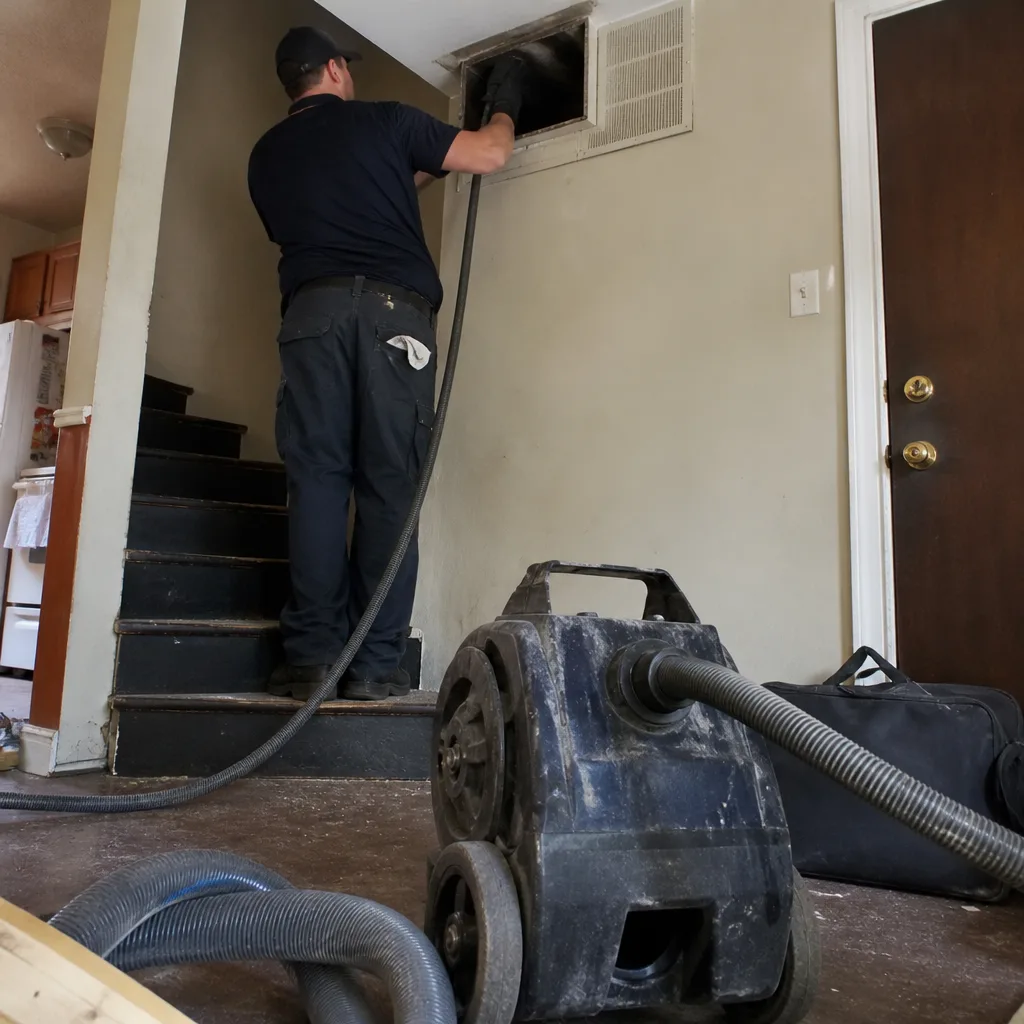 Before
 After
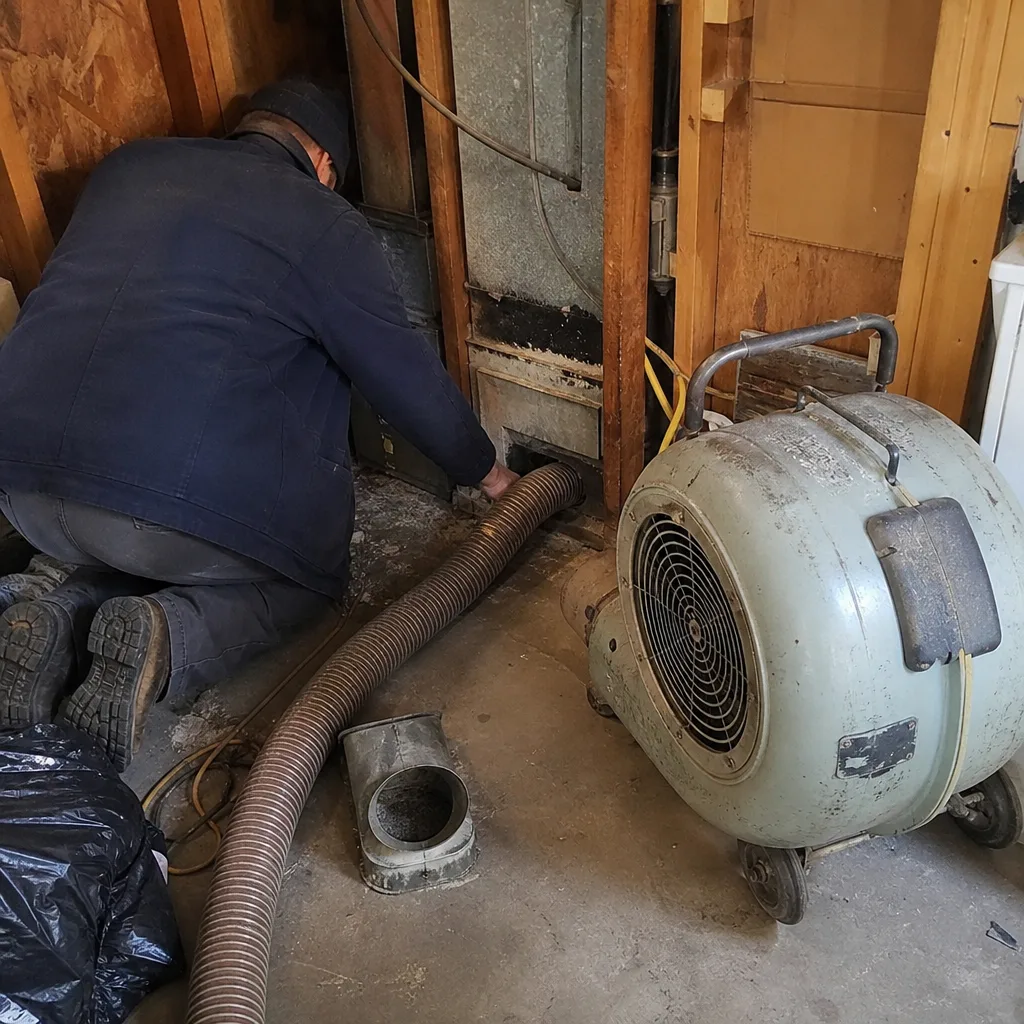 Before
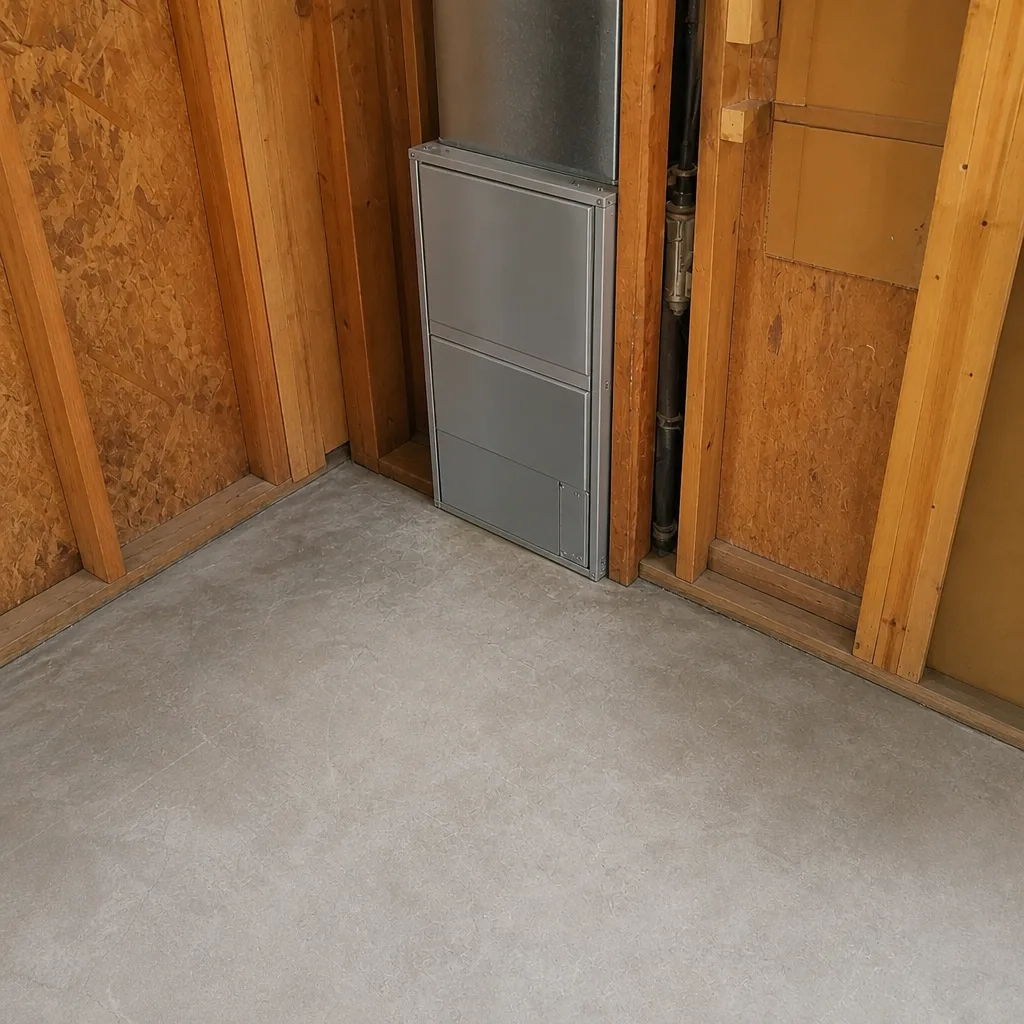 After
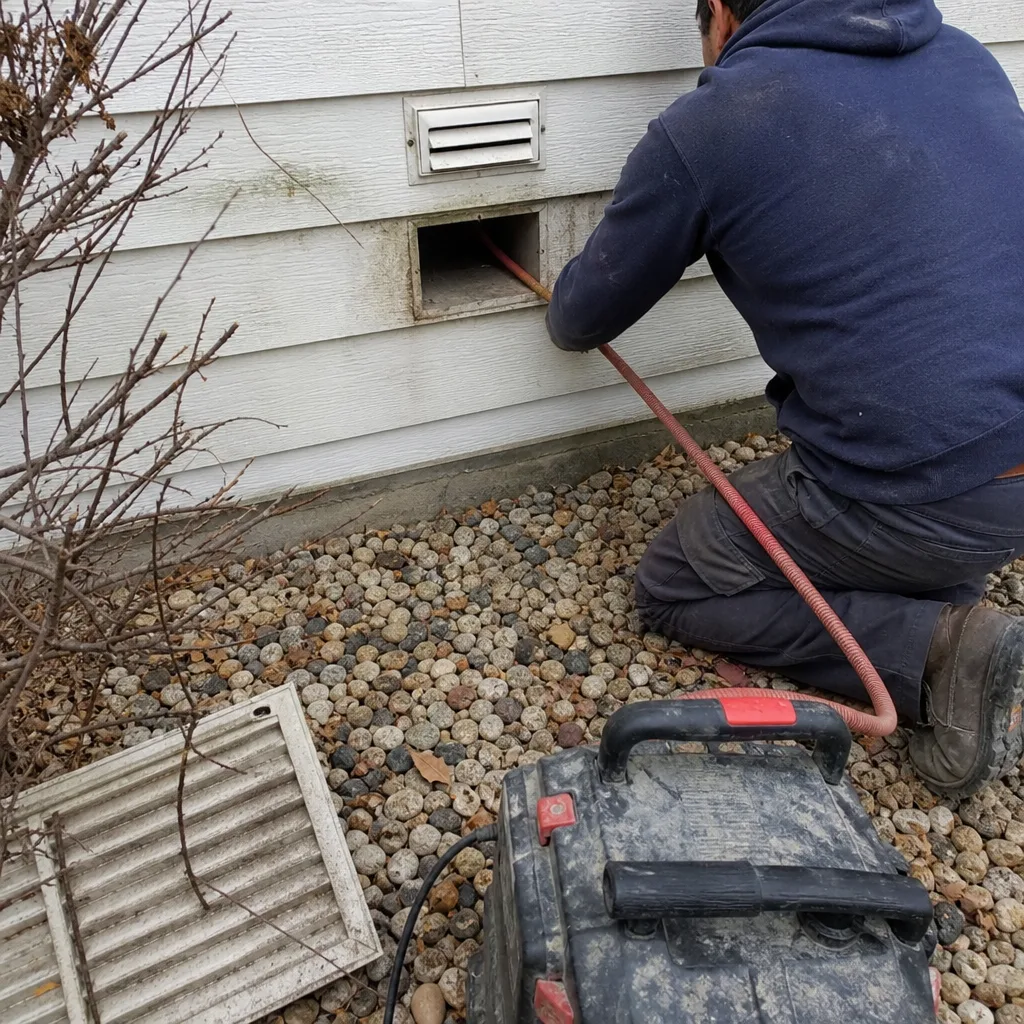 Before
 After
When to Call a Professional
Duct cleaning isn’t a once-a-year chore and it’s not something you can judge by looking at the registers. Here are the situations that make a call to a professional duct cleaning service worth it:
- Visible dust plumes from supply registers when the system kicks on, or dust settling on surfaces faster than usual
- A persistent musty or stale smell that doesn’t go away after vacuuming and dusting the home
- Recent renovation or remodeling that sent drywall dust and debris into the returns
- A new home purchase in Elgin where the duct history is unknown
- Dryer that takes noticeably longer to dry clothes, or a lint smell near the machine – call for dryer vent cleaning before it becomes a hazard
- An air quality system (Honeywell, Aprilaire, Guardsman) in place and you’re not sure it’s being maintained properly alongside the duct work
- Noticeable energy inefficiency you suspect is tied to leaking or blocked duct work
Any of those is a reasonable reason to get an estimate. Duct Cleaning Elgin offers free estimates in Elgin – call (855) 393-2846 for an exact quote on your system. The estimate is written, the price is set per job, and the equipment is not a mystery.
Frequently Asked Questions
The cost for a typical Elgin home depends on the size of the system, the number of branches, and whether the job includes containment-level work. A written estimate is the only honest number, and any contractor quoting per-vent over the phone is quoting a teaser price. Ask for a per-job estimate after an inspection – estimates should be free. Call (855) 393-2846 for a written estimate on your home’s system.
A significantly cheaper quote almost always means less equipment and less time on the job. A contractor running a single vacuum through one access point is doing a fraction of the work that a contractor with Rotobrush contact cleaning, Nikro HEPA extraction, and containment equipment is doing. The lower price reflects a narrower scope, not a better deal. Ask any low quote which equipment brands they use and whether they do containment; if the answers are vague, the price is too. Call (855) 393-2846 to compare a real per-job estimate.
Ask for before-and-after photos of your own ducts. That’s the simplest form of verification and any contractor running real equipment can provide it. Beyond photos, ask for a description of the process before the job starts: contact cleaning with a rotary brush, HEPA-rated extraction throughout, and containment if the duct system has contamination. If the process is explained up front, you’ll know what to look for afterward. Call (855) 393-2846 and we’ll walk you through what to expect.
It depends on the home, not a fixed schedule. Homes with pets, recent renovation, occupants with allergies or asthma, or a history of mold in the HVAC system benefit from more frequent cleaning. Most homes go several years between cleanings if the system stays sealed and filters are changed on time. The right interval is based on what the system actually looks like inside, not a calendar. Call (855) 393-2846 if you’re wondering whether your Elgin home is due.
Rotobrush for rotary brush contact cleaning, Nikro for HEPA-rated vacuum extraction, and Abatement Technologies for remediation-grade containment. Names like Honeywell, Aprilaire, and Guardsman come up in the air quality system side of the work, which matters if your home has an inline air quality unit. A contractor who can name all three cleaning brands and explain what each is for is demonstrating real equipment knowledge. One who can’t is likely to be running a generic vacuum. Call (855) 393-2846 to ask about our equipment directly.
Newer construction isn’t automatically clean duct work. Drywall dust and construction debris often settle into returns and trunk lines during the build, and that material can stay suspended in airflow for years. Even if you moved into a recently built Elgin home, an inspection is worth doing once to confirm the system is clean. Call (855) 393-2846 to schedule a walk-through.
The Bottom Line
Choosing the right air duct cleaning brand in Elgin comes down to equipment and process, not reviews and price. A contractor running Rotobrush contact cleaning, Nikro HEPA extraction, and Abatement Technologies containment gear is set up to clean the whole duct system, not just move air through it. A contractor running one tool is completing a fraction of the job, no matter how many stars their listing shows. Ask the questions in this guide, expect specific answers, and insist on before-and-after photos of your own ducts. A written per-job estimate, a real equipment inventory, and a willingness to explain the process separate a specialist from a bargain operator. If the answers hold up, book the job. If they don’t, move on to the next call.
Ready to talk through your system? Call (855) 393-2846. We answer 24/7. Fast dispatch from 7am to 7pm, Sunday through Friday.
Written by the team at Duct Cleaning Elgin.